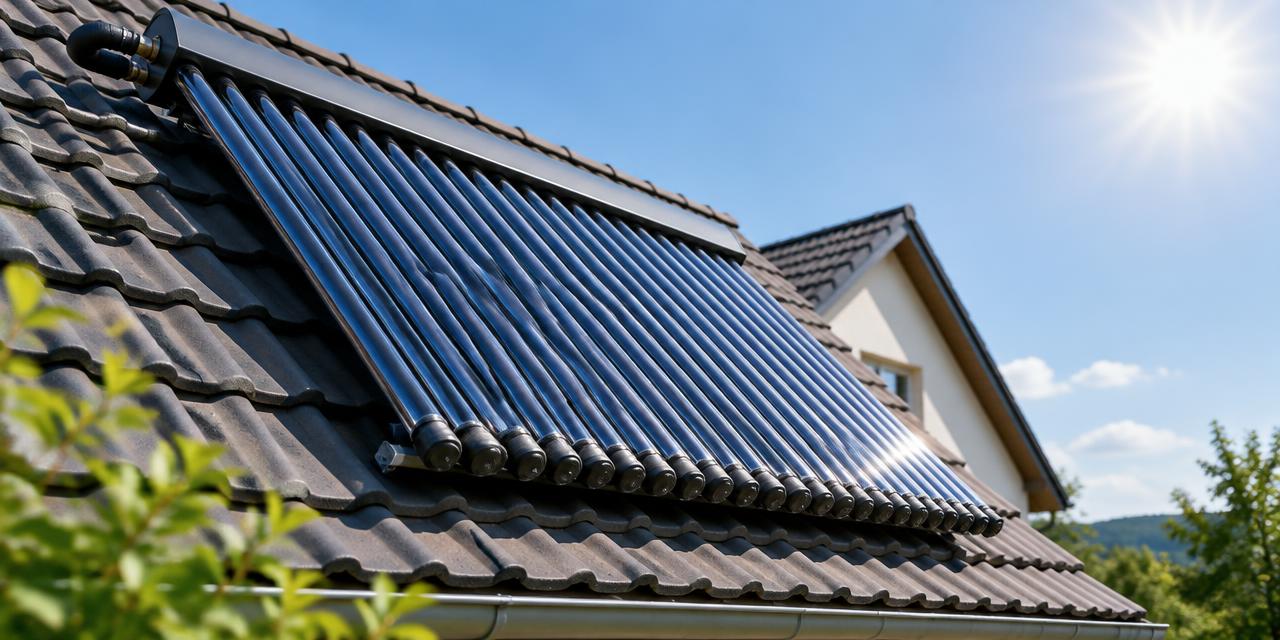
Solar water heating in Hombrechtikon: Guide and costs
Are you planning to install solar thermal collectors in Hombrechtikon to heat your domestic hot water? This is an excellent initiative to reduce energy bills and increase your property value. Switzerland's energy transition relies on sustainable and efficient solutions. Before starting your project, it is essential to anticipate the costs and technical requirements related to your roof. Use our free RenoIndex estimator to obtain a precise price range tailored to your local project within the canton of Zurich and plan your renovation budget effectively.
At a glance
Typical budget
CHF 13'200 – CHF 30'700
Midpoint
CHF 21'300
Grants found
0
Nearby companies
4
Worked examples in Hombrechtikon
Small project
CHF 10'300 – CHF 24'100
Typical project
CHF 13'200 – CHF 30'700
Large project
CHF 18'200 – CHF 41'800
Project
Quantity
Low
High
Per unit
Small project
3 m²
CHF 10'300
CHF 24'100
CHF 5'600
Typical project
6 m²
CHF 13'200
CHF 30'700
CHF 3'500
Large project
11 m²
CHF 18'200
CHF 41'800
CHF 2'600
Computed with our estimator for Hombrechtikon (regional factor included), standard finish. Only the project size changes.
Cost split (typical project)
Labour :CHF 8'500(40 %)
Materials :CHF 10'600(50 %)
Other costs :CHF 2'100(10 %)
What the price covers
Included
Supply and installation
VAT
Collectors, controls, standard connection and tank according to answers
Not included
Permits and architect fees
Unexpected structural issues
Possible subsidies
Roof refurbishment and replacement of main heating
Hombrechtikon's housing stock in figures
In Hombrechtikon, the federal building register lists 1'815 residential buildings and 4'187 dwellings. These municipal benchmarks help put your home in context, but do not replace an individual assessment.
54 %built before 1980
40 %heated by oil or gas
42.7 %electric hot water
1.8 %with declared solar thermal
Age of residential buildings
54 % built before 1980
Before 191923 %
1919–19453 %
1946–19607 %
1961–197010 %
1971–198011 %
1981–199016 %
1991–20007 %
2001–201013 %
Since 201110 %
Construction year does not reveal past renovations: check the current insulation condition.
Main heating energy
45 % · Heat pump
Heat pump45 %
Heating oil39 %
Wood9 %
Electricity4 %
District heating2 %
Gas1 %
This distribution describes recorded buildings, not your system's consumption or efficiency.
Heating and hot water: which energies?
Energy
Heating
Hot water
Gas
1 %
0.8 %
Heating oil
39 %
23 %
District heating
2 %
1.8 %
Heat pump
45 %
25.7 %
Electricity
4 %
42.7 %
Wood
9 %
3.8 %
Solar thermal
0 %
1.8 %
Each line gives the share of buildings using that energy, separately for heating and for hot water. The two columns do not always reach 100%: some buildings combine two systems, or reported none.
Type of heating system
Heat pump44.9 %
Boiler (unspecified)44.4 %
Stove4 %
Central electric heating2.3 %
Heat exchanger (district)2 %
Direct electric heaters1.8 %
A standard non-condensing boiler is usually older and less efficient.
Houses or apartment buildings?
Single-family houses70.5 %
Two-dwelling houses8 %
Apartment buildings (3+)21.5 %
10.2 % of buildings mix housing with shops or offices.
The typical building
storeys (median)
2
median footprint
120 m²
median dwelling area
100 m²
Renovations, heritage and volumes
For renovation planning in Hombrechtikon, the RegBL figures provide essential insights, though data coverage remains partial. Regarding heritage protection, only one building is listed as protected out of 28 known cases, making early consultation with municipal authorities advisable for permit requirements. Additionally, building volume statistics, measured for 32 houses under the SIA 416 standard, show a median of 687.5 m3. This metric is a vital indicator for assessing the scale of your insulation or heating upgrade projects. Referencing these official building-register figures helps ensure your renovation budget and technical planning align with the local building characteristics.
1
buildings flagged as protected
status known for 28 of 1'815 buildings; check with the municipality
Solar thermal collectors are a proven solution for residential homes. They usually cover a large portion of your hot water needs during the summer months, reducing dependence on fossil fuels.
In winter, they serve as support for preheating water, which optimizes the overall efficiency of your heating system. It is a long-term profitable investment that contributes to environmental protection while improving your home's thermal comfort.
Plan early to ensure maximum utilization of solar energy throughout the changing seasons.
Sizing and technical integration
The success of a solar project depends on precise sizing. Combining collectors with a heat pump requires a detailed study to ensure perfect synergy. It is crucial to evaluate the available roof surface, its orientation, and tilt.
A professional can determine the optimal size of the installation to avoid over-dimensioning, which is often counterproductive. Successful technical integration guarantees constant production and a long lifespan for your equipment.
For a reliable estimate, use our RenoIndex tool to obtain a price range suitable for your project.
Funding and subsidies
In the canton of Zurich, it is recommended to check the current aid programs before signing any contract. Although municipal rules are flexible, the cantonal framework defines eligibility criteria.
Remember that these grants can significantly reduce the return on investment period for your thermal system. Use the RenoIndex estimator to simulate your costs before submitting your subsidy applications.
Maintenance and durability
Once installed, your solar system requires minimal maintenance. However, periodic inspection is recommended to check the circuit seals, heat transfer fluid levels, and collector integrity.
These simple steps extend the lifespan of your system and maintain high performance over the years. Sustainability is the main advantage of solar energy.
By investing in a quality installation today, you ensure stable hot water production for decades to come, while contributing to regional and national energy goals.
Your project in 5 steps
1. Estimate
Set a budget range with the estimator.
2. Grants
Apply before work starts.
3. Quotes
Compare at least 3 quotes.
4. Permit
Check with the municipality whether a permit is needed.
5. Works
Follow the site and do a written handover.
Grants and subsidies
No specific grant listed for this work. Maintenance tax deductions may still apply.
Companies in the area
F. Imeri Sàrl
2829 Vermes · about 96.7 km
The website presented under the name Imeri Chauffage et Sanitaire Sàrl offers plumbing, heating and solar thermal work, while F. Imeri Sàrl’s registered purpose refers to a scrap metal business.
Suggestions from the commercial register by distance and activity. Not an endorsement or partnership.
Frequently asked questions
What is the average lifespan of a system?
A well-maintained solar thermal system typically lasts between 20 and 25 years. The control system and pumps may need replacement sooner, usually around the 15-year mark.
Do collectors work without direct sunlight?
Yes, solar thermal collectors capture diffuse radiation even on cloudy days. However, the efficiency is significantly higher when there is direct sunlight hitting the panels.
Do I need a permit in Hombrechtikon?
Generally, roof-integrated solar installations are simplified, but always verify local building regulations and municipal requirements before starting your installation work.
How do I get a reliable quote?
Use the RenoIndex estimator to get an indicative price range, then contact several certified local companies to compare detailed and accurate quotes for your project.