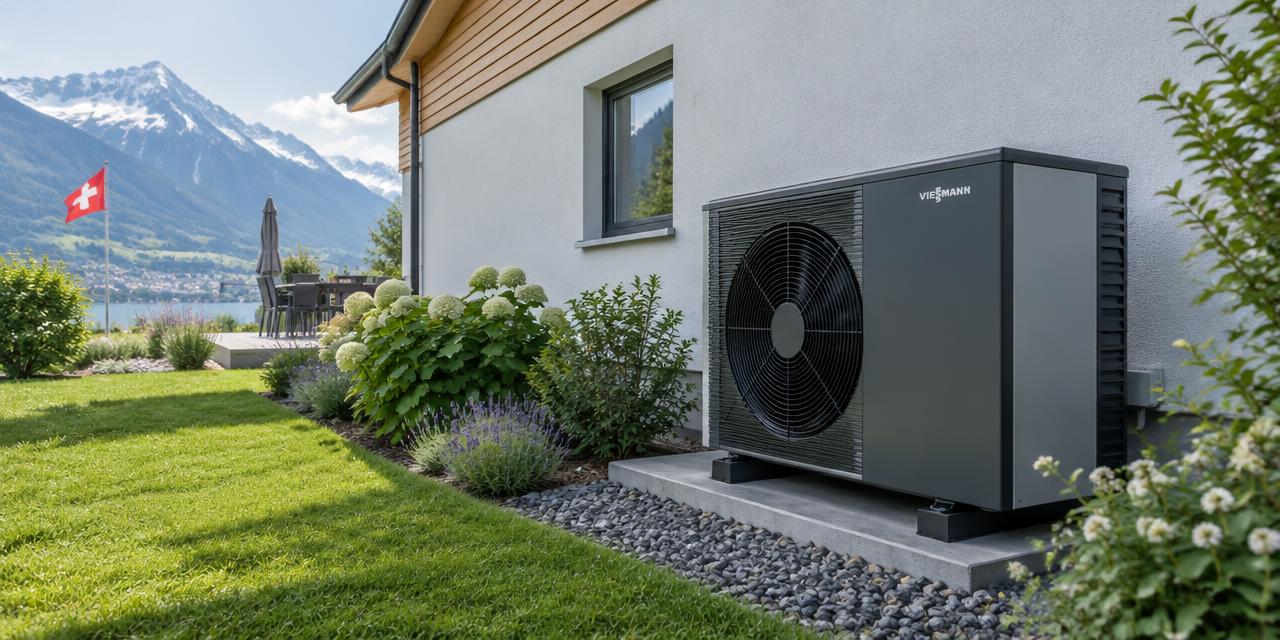
Heat pump installation in Fällanden: A complete guide
Installing a heat pump is a strategic investment for your property in Fällanden. By replacing your old heating system with this efficient technology, you sustainably reduce your carbon footprint while increasing the value of your real estate. This guide walks you through the essential steps of your energy transition project. To get a precise budget estimate tailored to your specific needs, use our free RenoIndex tool today and quickly discover the price range expected for your renovation work.
At a glance
Typical budget
CHF 42'400 – CHF 78'900
Midpoint
CHF 59'300
Grants found
0
Nearby companies
4
Worked examples in Fällanden
Small project
CHF 33'500 – CHF 61'400
Typical project
CHF 42'400 – CHF 78'900
Large project
CHF 55'600 – CHF 105'200
Project
Quantity
Low
High
Per unit
Small project
80 m²
CHF 33'500
CHF 61'400
CHF 600
Typical project
160 m²
CHF 42'400
CHF 78'900
CHF 400
Large project
280 m²
CHF 55'600
CHF 105'200
CHF 300
Computed with our estimator for Fällanden (regional factor included), standard finish. Only the project size changes.
Cost split (typical project)
Labour :CHF 23'700(40 %)
Materials :CHF 29'600(50 %)
Other costs :CHF 5'900(10 %)
What the price covers
Included
Supply and installation
VAT
Heat pump and standard connections; removal and equipment only according to answers
Not included
Permits and architect fees
Unexpected structural issues
Possible subsidies
Drilling beyond 150 m, buried or contaminated tank, asbestos, insulation and new finishes
With air-to-air: hot water and ducts only if selected; adaptations beyond the options excluded
Fällanden's housing stock in figures
In Fällanden, the federal building register lists 1'378 residential buildings and 4'354 dwellings. These municipal benchmarks help put your home in context, but do not replace an individual assessment.
50 %built before 1980
65 %heated by oil or gas
14 %electric hot water
0.4 %with declared solar thermal
Age of residential buildings
50 % built before 1980
Before 19196 %
1919–19451 %
1946–19605 %
1961–197022 %
1971–198016 %
1981–199020 %
1991–200010 %
2001–201012 %
Since 20118 %
Construction year does not reveal past renovations: check the current insulation condition.
Main heating energy
36 % · Gas
Gas36 %
Heating oil29 %
Heat pump29 %
District heating2 %
Electricity2 %
Wood2 %
This distribution describes recorded buildings, not your system's consumption or efficiency.
Heating and hot water: which energies?
Energy
Heating
Hot water
Gas
36 %
33.2 %
Heating oil
29 %
22.2 %
District heating
2 %
1.4 %
Heat pump
29 %
25.5 %
Electricity
2 %
14 %
Wood
2 %
1.3 %
Each line gives the share of buildings using that energy, separately for heating and for hot water. The two columns do not always reach 100%: some buildings combine two systems, or reported none.
Type of heating system
Boiler (unspecified)62.4 %
Heat pump29.5 %
Stove2.7 %
Heat exchanger (district)1.8 %
Central electric heating1.5 %
Condensing boiler1.3 %
Direct electric heaters0.7 %
A standard non-condensing boiler is usually older and less efficient.
Renovations, heritage and volumes
When planning your renovation in Fällanden, official RegBL figures provide critical insights for your project. With one building under heritage protection out of 1378, it is essential to contact the municipality early to navigate permit requirements correctly. Regarding building scale, the median volume is 630 m3 based on the SIA 416 standard; however, note that this data is only available for 14 out of 825 houses, representing partial coverage. These figures help homeowners estimate the necessary scope for insulation and heating upgrades while ensuring that potential heritage restrictions are addressed appropriately within the municipal planning process.
1
buildings flagged as protected
status known for 29 of 1'378 buildings; check with the municipality
Before starting, it is crucial to check if your area can connect to a priority district heating network. If this option is available, it might be prioritized according to local energy policies.
Simultaneously, a thermal audit is essential to correctly size your heat pump. In the canton of Zurich, the local design outdoor temperature plays a decisive role in defining the necessary capacity.
A well-calibrated installation ensures optimal thermal comfort throughout the year, even during harsh winters. Use RenoIndex to estimate the costs of these technical preliminary studies essential for the success of your installation.
Compliance with noise standards
The installation of an air-water heat pump requires special attention regarding the neighborhood. These outdoor units produce noise emissions that must strictly comply with current noise limits.
It is recommended to choose a sensible location, away from rest areas, and to consider soundproofing solutions if necessary. Respecting these neighborly rules is essential to avoid future litigation.
On the RenoIndex website, you will find indications on average budgets for integrating these acoustic measures into your overall project. A well-planned project ensures peace of mind for your home and your neighbors.
Administrative and technical considerations
A precise study of your heat distribution system, such as underfloor heating or low-temperature radiators, is recommended to maximize the efficiency of the heat pump. RenoIndex helps you anticipate these steps and provides a clear estimate of your investment.
By carefully preparing your file, you facilitate obtaining the required permits and ensure the durability of your energy system.
Financing and long-term profitability
Switching to a heat pump represents a significant initial cost, but the energy savings generated ensure long-term profitability. Remember to check the energy renovation grants available in the canton of Zurich.
These supports can significantly lighten your overall budget. Our RenoIndex calculator allows you to get a realistic price range for your project in Fällanden, including equipment and installation.
Analyzing your future operating costs against your current system helps visualize the return on investment. Investing in state-of-the-art technology now is a wise choice that increases the value of your property in the Zurich market.
Your project in 5 steps
1. Estimate
Set a budget range with the estimator.
2. Grants
Apply before work starts.
3. Quotes
Compare at least 3 quotes.
4. Permit
Check with the municipality whether a permit is needed.
5. Works
Follow the site and do a written handover.
Grants and subsidies
No specific grant listed for this work. Maintenance tax deductions may still apply.
Companies in the area
F. Imeri Sàrl
2829 Vermes · about 87.4 km
The website presented under the name Imeri Chauffage et Sanitaire Sàrl offers plumbing, heating and solar thermal work, while F. Imeri Sàrl’s registered purpose refers to a scrap metal business.
Suggestions from the commercial register by distance and activity. Not an endorsement or partnership.
Frequently asked questions
What are the steps to start my project in Fällanden?
Start by checking if your area can connect to district heating. Then, conduct a thermal audit to size your heat pump. Use RenoIndex to estimate your budget, then contact municipal authorities for required permits in the canton of Zurich.
Are air-water heat pumps noisy?
Outdoor units must meet strict noise limits to avoid disturbing neighbors. A well-chosen location and, if necessary, soundproofing measures help maintain noise levels in accordance with local and cantonal requirements.
How to estimate the price of my installation?
The price depends on the power needed and your house configuration. Use the free RenoIndex tool to get a precise price range based on current regional standards and plan your investment with peace of mind.
Are there financial grants for my project?
Yes, grants for energy renovation may be available in the canton of Zurich. We advise you to consult the official cantonal portals to learn about eligibility conditions and amounts you might claim for your energy transition.