
FJUCONSULTING Sàrl
2504 Biel/Bienne · about 27.9 km
FJUConsulting specializes in the design and installation of HVAC, plumbing, and refrigeration systems for buildings.
fjuconsulting.chHeat pump installation · Burgdorf
At a glance
Small project
CHF 30'600 – CHF 55'900
Typical project
CHF 38'600 – CHF 71'900
Large project
CHF 50'600 – CHF 95'800
| Project | Quantity | Low | High | Per unit |
|---|---|---|---|---|
| Small project | 80 m² | CHF 30'600 | CHF 55'900 | CHF 500 |
| Typical project | 160 m² | CHF 38'600 | CHF 71'900 | CHF 300 |
| Large project | 280 m² | CHF 50'600 | CHF 95'800 | CHF 300 |
Computed with our estimator for Burgdorf (regional factor included), standard finish. Only the project size changes.
Included
Not included
In Burgdorf, the federal building register lists 2'822 residential buildings and 9'068 dwellings. These municipal benchmarks help put your home in context, but do not replace an individual assessment.
73 % built before 1980
Construction year does not reveal past renovations: check the current insulation condition.
42 % · Gas
This distribution describes recorded buildings, not your system's consumption or efficiency.
| Energy | Heating | Hot water |
|---|---|---|
| Gas | 42 % | 33.7 % |
| Heating oil | 30 % | 22.8 % |
| District heating | 2 % | 1.8 % |
| Heat pump | 18 % | 11.2 % |
| Electricity | 1 % | 24.2 % |
| Wood | 6 % | 4.4 % |
| Solar thermal | 1 % | 1.4 % |
Each line gives the share of buildings using that energy, separately for heating and for hot water. The two columns do not always reach 100%: some buildings combine two systems, or reported none.
A standard non-condensing boiler is usually older and less efficient.
For homeowners in Burgdorf, the official building register provides essential insights for your renovation planning. The median building volume is 984 m3, which serves as a key reference for determining the scale of necessary heating or insulation improvements. Please note that this figure represents only a small portion of the 1618 houses recorded, as most use different standards. Since data regarding the renovation year and heritage protection status is currently incomplete or not recorded, we strongly advise you to contact the municipal authorities directly to clarify specific building requirements before you begin any major work on your property.
Source : OFS — RegBL (export communal complet). Existing residential buildings; percentages of recorded values.
The first step is to assess your building's compatibility with a heat pump. First check whether your area can connect to a priority district heating network, as this option is often preferred in dense urban areas.
If a heat pump is suitable, ensure that your current distribution system, ideally underfloor heating, can operate at low temperatures.
Adequate thermal insulation will also reduce the required capacity, ensuring better long-term profitability of your energy investment.
Sizing is a critical step for thermal comfort and performance. The local design outdoor temperature sets the heat pump's capacity needed for your home. Accurate calculation by a professional prevents expensive oversizing or uncomfortable undersizing.
It is important to analyze your home's actual heat demand based on its exposure and insulation. Use the RenoIndex estimator to understand the budget impacts of different installation capacities and choose the most suitable solution for your project.
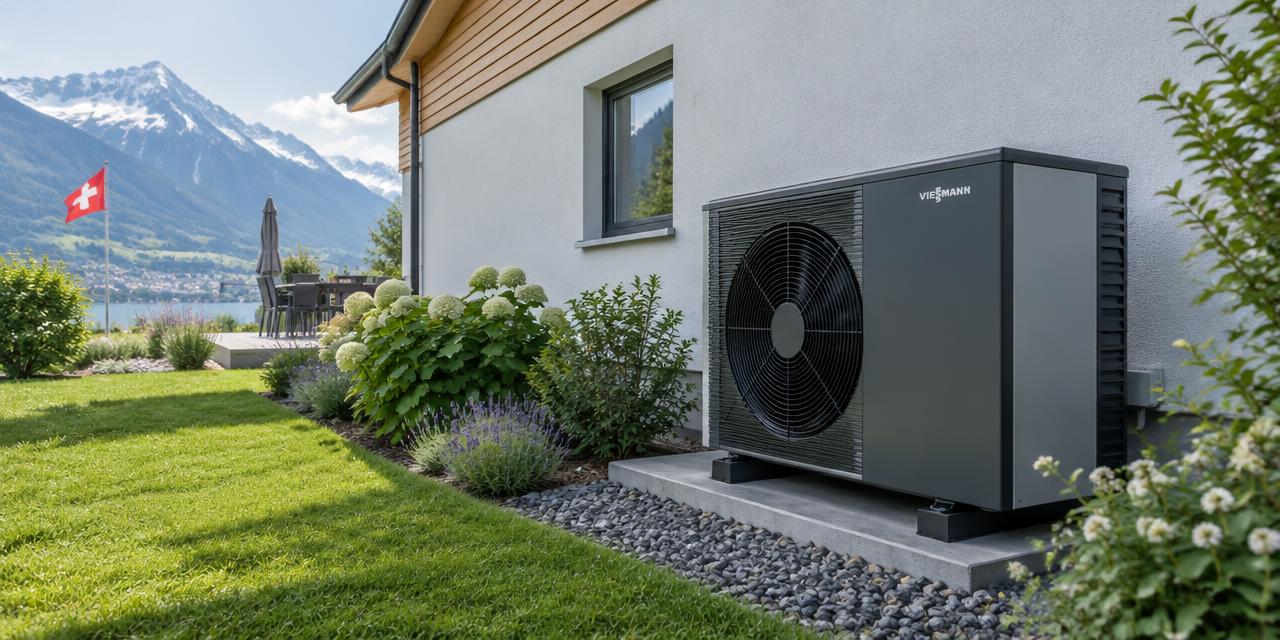
Installing an air-water heat pump requires careful attention to noise management. Outdoor air-water heat pumps must meet noise limits towards neighbours to maintain neighbourhood harmony.
The positioning of the outdoor unit must be studied to avoid noise pollution, particularly near bedrooms or windows. Manufacturers today offer very quiet models, but correct planning remains essential.
By respecting these technical requirements, you facilitate obtaining the necessary authorizations and ensure a durable, trouble-free installation.
The cost of an installation depends on many parameters such as the chosen technology and the energy renovation work required beforehand. For effective budget management, it is advisable to compare several quotes and check for available financial grants.
If no specific local programs apply, focus on the energy savings generated over the long term. Our free RenoIndex estimator helps you obtain a reliable price range for your heating project in Burgdorf.
Plan your transition with peace of mind using our online financial simulation tools.
1. Estimate
Set a budget range with the estimator.
2. Grants
Apply before work starts.
3. Quotes
Compare at least 3 quotes.
4. Permit
Check with the municipality whether a permit is needed.
5. Works
Follow the site and do a written handover.
No specific grant listed for this work. Maintenance tax deductions may still apply.
2504 Biel/Bienne · about 27.9 km
FJUConsulting specializes in the design and installation of HVAC, plumbing, and refrigeration systems for buildings.
fjuconsulting.ch2504 Biel/Bienne · about 27.9 km
Operating in Biel/Bienne since 1948, E. Vauclair SA provides plumbing, heating and solar installations, architectural sheet metalwork, roofing and flat roof renovation.
vauclair.ch2502 Biel/Bienne · about 29.9 km
Biel-based company specializing in bathroom installation and renovation, water heater replacement, and heat pump installation.
yb-sanitaire.ch2603 Péry · about 30.9 km
Company specialized in the dismantling, removal, and recycling of technical equipment such as elevators, heating, and ventilation systems.
kds.ecoSuggestions from the commercial register by distance and activity. Not an endorsement or partnership.
Most heat pump installations require a notification or formal permit. It is mandatory to contact the local building department or your municipality to find out the specific procedures for your area before ordering.
In the canton of Bern, grants depend on current energy promotion programs. We recommend visiting the canton's official website or the Buildings Program to check the eligibility of your heating replacement project.
In general, replacing a heating system takes between 3 and 5 working days. The duration can vary depending on the complexity of the installation and the adaptation work required on the existing distribution network.
You can use the RenoIndex estimator for free to obtain an appropriate price range. This tool takes into account the specificities of your home to provide you with realistic estimates based on Swiss market standards.