
Eco6therm Sàrl
2832 Rebeuvelier · about 87.5 km
Eco6therm specializes in the installation of heating systems, particularly heat pumps, and solar photovoltaic energy solutions.
eco6therm.chHome solar battery · Bülach
At a glance
Small project
CHF 4'400 – CHF 10'200
Typical project
CHF 8'100 – CHF 17'200
Large project
CHF 13'900 – CHF 28'500
| Project | Quantity | Low | High | Per unit |
|---|---|---|---|---|
| Small project | 5 kWh | CHF 4'400 | CHF 10'200 | CHF 1'400 |
| Typical project | 10 kWh | CHF 8'100 | CHF 17'200 | CHF 1'200 |
| Large project | 18 kWh | CHF 13'900 | CHF 28'500 | CHF 1'100 |
Computed with our estimator for Bülach (regional factor included), standard finish. Only the project size changes.
Included
Not included
In Bülach, the federal building register lists 2'304 residential buildings and 11'260 dwellings. These municipal benchmarks help put your home in context, but do not replace an individual assessment.
50 % built before 1980
Construction year does not reveal past renovations: check the current insulation condition.
41 % · Heat pump
This distribution describes recorded buildings, not your system's consumption or efficiency.
| Energy | Heating | Hot water |
|---|---|---|
| Gas | 12 % | 10.6 % |
| Heating oil | 38 % | 29.3 % |
| District heating | 1 % | 0.7 % |
| Heat pump | 41 % | 32.8 % |
| Electricity | 2 % | 20.2 % |
| Wood | 5 % | 2.9 % |
| Solar thermal | 0 % | 1.8 % |
Each line gives the share of buildings using that energy, separately for heating and for hot water. The two columns do not always reach 100%: some buildings combine two systems, or reported none.
A standard non-condensing boiler is usually older and less efficient.
11.5 % of buildings mix housing with shops or offices.
For your renovation projects in Bülach, the Federal Register of Buildings and Dwellings (RegBL) figures offer essential guidance. With 1 building officially listed as protected out of 2304 records, it is vital to contact the municipality early to address permit requirements. The median building volume stands at 727 m3 based on the SIA 416 standard, which is critical for scaling your heating or insulation upgrades. Please note that data coverage is partial, as the volume was specifically measured for only 237 out of the 994 houses registered. These metrics help you accurately estimate renovation costs and local regulatory needs.
Source : OFS — RegBL (export communal complet). Existing residential buildings; percentages of recorded values.
A storage battery is particularly cost-effective if your solar production significantly exceeds your electricity consumption during the day. Without storage, excess energy is fed into the grid at a rate often lower than the cost of purchased electricity.
By installing a battery, you retain this energy for use when the panels are not producing. Analyze your consumption habits to determine if the investment makes sense.
For a budget overview before requesting quotes, consult the RenoIndex estimator, which will provide a realistic price range in CHF for your installation.
It is crucial to size the storage capacity based on your actual evening consumption rather than the power of your solar panels. A battery that is too large represents unnecessary costs, while too little capacity limits potential savings.
Take into account your nighttime consumption peaks and the size of your current installation. Correct sizing allows for an optimal self-consumption rate.
Use the RenoIndex simulator to explore the different capacities available on the market and get a price range in CHF that matches your specific energy needs.
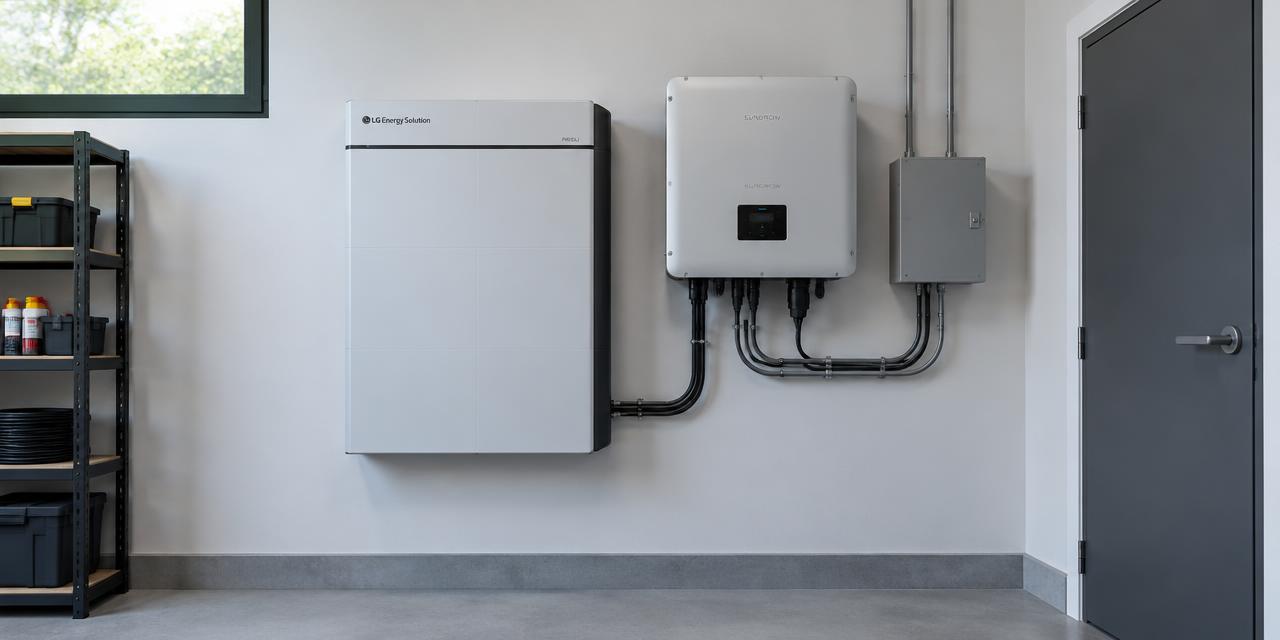
Before any purchase, it is essential to check the technical compatibility between your future storage system and your existing inverter.
Some inverters are not compatible with all battery technologies, which could require additional equipment or complex updates. Also, ensure the available space is suitable for the thermal and safety constraints of lithium-ion batteries.
Planning these technical aspects in advance avoids unexpected extra costs during the project. To better understand the financial impact of these components, access the free RenoIndex estimator now to get a price range in CHF.
Once your needs are identified, hire certified professionals to ensure the safety and performance of your system. A solar battery installation requires specialized electrical expertise for connection and software configuration.
Monitoring your production and consumption should be simplified by a reliable management interface. Rigor in choosing components and tradespeople is the key to a durable installation.
To help you structure your budget and compare received quotes, do not forget to use the RenoIndex tool. It will provide you with a free price range in CHF to guide your decisions.
1. Estimate
Set a budget range with the estimator.
2. Grants
Apply before work starts.
3. Quotes
Compare at least 3 quotes.
4. Permit
Check with the municipality whether a permit is needed.
5. Works
Follow the site and do a written handover.
No specific grant listed for this work. Maintenance tax deductions may still apply.
2832 Rebeuvelier · about 87.5 km
Eco6therm specializes in the installation of heating systems, particularly heat pumps, and solar photovoltaic energy solutions.
eco6therm.ch2735 Malleray · about 99.9 km
Company specialized in electrical installations and telecommunications systems, including network infrastructure and related trade.
telecrengglisa.ch2718 Lajoux JU · about 108.7 km
Jura-based specialist in photovoltaic panel installation and energy storage solutions with AI-driven optimization.
hypersolaire.ch2605 Sonceboz-Sombeval · about 109.2 km
Solar conseil Sàrl specializes in the installation of photovoltaic power plants, energy storage solutions, and energy efficiency consulting in the Jura and Bernese Jura regions.
solarconseil.chSuggestions from the commercial register by distance and activity. Not an endorsement or partnership.
A battery significantly increases your self-consumption by using solar energy produced during the day in the evening. This reduces your electricity purchases from the grid, optimizes the profitability of your solar panels, and increases your overall energy independence.
Most modern solar batteries, primarily lithium-ion, have a lifespan ranging between 10 and 20 years. Performance may slightly decrease over time depending on the number of charge cycles and temperature management.
Generally, installing a battery inside an existing building does not require a building permit, but it must strictly comply with Swiss electrical safety standards. Always consult local authorities or your installer to confirm the situation.
To obtain a reliable estimate, you can use the free RenoIndex tool. It quickly provides you with a price range in CHF tailored to your needs. This allows you to plan your budget before contacting professionals for detailed quotes.