
Eco6therm Sàrl
2832 Rebeuvelier · about 90.7 km
Eco6therm specializes in the installation of heating systems, particularly heat pumps, and solar photovoltaic energy solutions.
eco6therm.chHome solar battery · Dübendorf
At a glance
Small project
CHF 4'400 – CHF 10'200
Typical project
CHF 8'100 – CHF 17'200
Large project
CHF 13'900 – CHF 28'500
| Project | Quantity | Low | High | Per unit |
|---|---|---|---|---|
| Small project | 5 kWh | CHF 4'400 | CHF 10'200 | CHF 1'400 |
| Typical project | 10 kWh | CHF 8'100 | CHF 17'200 | CHF 1'200 |
| Large project | 18 kWh | CHF 13'900 | CHF 28'500 | CHF 1'100 |
Computed with our estimator for Dübendorf (regional factor included), standard finish. Only the project size changes.
Included
Not included
In Dübendorf, the federal building register lists 3'310 residential buildings and 16'300 dwellings. These municipal benchmarks help put your home in context, but do not replace an individual assessment.
59 % built before 1980
Construction year does not reveal past renovations: check the current insulation condition.
47 % · Gas
This distribution describes recorded buildings, not your system's consumption or efficiency.
| Energy | Heating | Hot water |
|---|---|---|
| Gas | 47 % | 42 % |
| Heating oil | 23 % | 20 % |
| District heating | 1 % | 1.3 % |
| Heat pump | 26 % | 21.2 % |
| Electricity | 1 % | 13.2 % |
| Wood | 2 % | 0.8 % |
Each line gives the share of buildings using that energy, separately for heating and for hot water. The two columns do not always reach 100%: some buildings combine two systems, or reported none.
A standard non-condensing boiler is usually older and less efficient.
10.4 % of buildings mix housing with shops or offices.
For your renovation plans in Dübendorf, the official federal building register data provides essential insights for cost estimation. With a median house volume of 920 m3, these figures help you gauge the scale of necessary heating or insulation upgrades. Please be aware that data coverage is partial, as only 19 out of 1,752 houses were measured according to the SIA 416 standard. Utilizing these figures allows you to better understand the scope of your project, ensuring that your renovation budget is aligned with the specific structural characteristics of properties located within this municipality.
Source : OFS — RegBL (export communal complet). Existing residential buildings; percentages of recorded values.
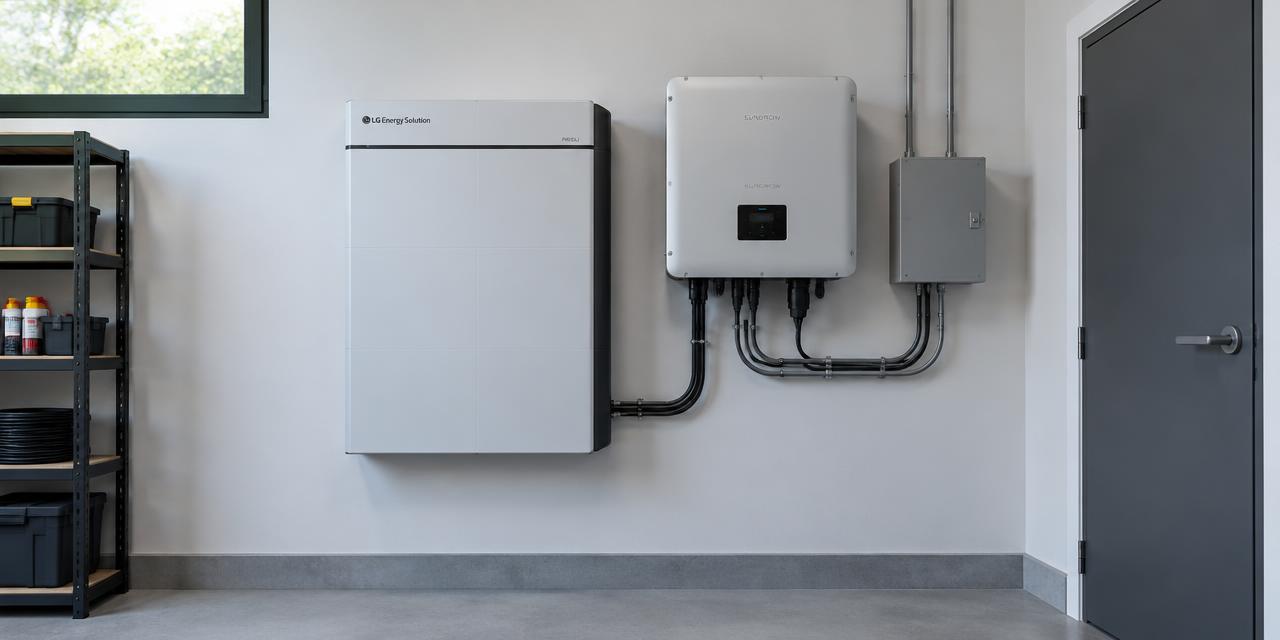
A battery is worthwhile when solar output clearly exceeds your daytime use. Without storage, this surplus is fed into the grid, often at a price lower than the cost of purchasing electricity. By storing this energy, you save significantly on your bills.
It is crucial to assess your needs before buying to avoid oversizing. Storage allows for better management of your overall energy autonomy.
To understand the financial impact of this investment, consult the RenoIndex estimator, which will provide you with an estimated cost range based on prices in your area.
The golden rule is to size capacity by evening consumption, not panel power. An oversized battery represents an unnecessary cost, while too little capacity limits your real savings.
Analyze your household consumption habits to identify the energy amount needed between sunset and the following sunrise. Careful planning allows you to maximize the return on investment of your photovoltaic system.
Do not forget to visit RenoIndex to get a price estimate and plan your budget accurately before contacting a local installer.
Before buying, it is essential to check compatibility with your existing inverter. Some modern models directly integrate storage management, while others require a hybrid inverter.
Installation must be performed by certified professionals to ensure safety and compliance with standards in the canton of Zurich. A clean technical integration ensures a longer lifespan for your equipment.
To get advice on labor costs and required materials, our RenoIndex tool is available to provide a realistic price range for your project.
A successful solar project in Dübendorf requires methodical preparation. Start by analyzing your consumption data to define your actual needs. Then, request several quotes to compare technical solutions and costs proposed by local companies.
Do not forget to account for installation and commissioning fees. Monitoring performance after installation allows you to adjust your habits for optimal profitability.
To facilitate your budget planning, use the free RenoIndex estimator to obtain an updated and reliable cost range for your home battery installation.
1. Estimate
Set a budget range with the estimator.
2. Grants
Apply before work starts.
3. Quotes
Compare at least 3 quotes.
4. Permit
Check with the municipality whether a permit is needed.
5. Works
Follow the site and do a written handover.
No specific grant listed for this work. Maintenance tax deductions may still apply.
2832 Rebeuvelier · about 90.7 km
Eco6therm specializes in the installation of heating systems, particularly heat pumps, and solar photovoltaic energy solutions.
eco6therm.ch2735 Malleray · about 102 km
Company specialized in electrical installations and telecommunications systems, including network infrastructure and related trade.
telecrengglisa.ch2605 Sonceboz-Sombeval · about 110.8 km
Solar conseil Sàrl specializes in the installation of photovoltaic power plants, energy storage solutions, and energy efficiency consulting in the Jura and Bernese Jura regions.
solarconseil.ch2718 Lajoux JU · about 111.8 km
Jura-based specialist in photovoltaic panel installation and energy storage solutions with AI-driven optimization.
hypersolaire.chSuggestions from the commercial register by distance and activity. Not an endorsement or partnership.
Installing a battery involves high electrical risks. It is strongly recommended to hire a qualified electrician to ensure safety, comply with cantonal standards, and maintain the manufacturer's warranty. Improper connection can void your insurance.
The typical lifespan of a lithium battery is about 10 to 15 years. It mainly depends on the number of charge and discharge cycles, as well as environmental conditions like storage temperature.
The battery should be placed in a dry location, away from direct sunlight and extreme temperatures, ideally in a basement or a ventilated technical room. Avoid areas subject to strong thermal variations.
Yes, it is entirely possible. You will need a hybrid inverter or an additional battery inverter. Always check the technical compatibility with your current photovoltaic system before proceeding with the purchase.