
Hallenbarter & Russi Gebäudetechnik AG
3988 Obergoms · about 142.9 km
Obergoms-based company specializing in sanitary installations, heating systems, roofing, and tinsmith work for new builds and renovations.
hallenbarter-russi.chHeat pump installation · Thal
At a glance
Small project
CHF 29'400 – CHF 53'700
Typical project
CHF 37'100 – CHF 69'100
Large project
CHF 48'600 – CHF 92'100
| Project | Quantity | Low | High | Per unit |
|---|---|---|---|---|
| Small project | 80 m² | CHF 29'400 | CHF 53'700 | CHF 500 |
| Typical project | 160 m² | CHF 37'100 | CHF 69'100 | CHF 300 |
| Large project | 280 m² | CHF 48'600 | CHF 92'100 | CHF 200 |
Computed with our estimator for Thal (regional factor included), standard finish. Only the project size changes.
Included
Not included
In Thal, the federal building register lists 1'690 residential buildings and 3'460 dwellings. These municipal benchmarks help put your home in context, but do not replace an individual assessment.
51 % built before 1980
Construction year does not reveal past renovations: check the current insulation condition.
38 % · Gas
This distribution describes recorded buildings, not your system's consumption or efficiency.
| Energy | Heating | Hot water |
|---|---|---|
| Gas | 38 % | 26.2 % |
| Heating oil | 22 % | 15 % |
| District heating | 3 % | 3.1 % |
| Heat pump | 32 % | 31.2 % |
| Electricity | 1 % | 19.2 % |
| Wood | 4 % | 1.1 % |
| Solar thermal | 0 % | 4.1 % |
Each line gives the share of buildings using that energy, separately for heating and for hot water. The two columns do not always reach 100%: some buildings combine two systems, or reported none.
A standard non-condensing boiler is usually older and less efficient.
When planning renovations in Thal, it is essential to consider the RegBL data: 17 buildings are officially heritage-protected, meaning you should contact the municipality early to clarify permit requirements. The median building volume of 963 m3 helps you estimate the scale of necessary heating or insulation upgrades. Please be aware that data coverage is partial, as volumes measured according to the SIA 416 standard are only available for 23 out of 1262 houses. These figures provide a useful framework for your project, ensuring you align your renovation plans with both local heritage regulations and the physical scale of your home.
Source : OFS — RegBL (export communal complet). Existing residential buildings; percentages of recorded values.
Before starting your work, first check whether your area can connect to a priority district heating network, as this option may be preferred by local authorities. Once you have verified this, analyze your building's insulation.
A heat pump is more effective if thermal losses are minimized. Seek advice from specialists to determine if your current heat emitters, such as radiators, are compatible with the low operating temperatures typical of modern heat pump systems.
Proper planning is the key to energy efficiency.
The correct sizing of your installation is crucial to guarantee optimal efficiency all year round. The local design outdoor temperature sets the heat pump's capacity needed to heat your home effectively even on the coldest days in Thal.
An oversized or undersized system can lead to premature wear or excessive electricity consumption.
Use RenoIndex to get an estimated price range in CHF for your project and be sure to consult a certified installer to validate the technical calculations specific to your location.
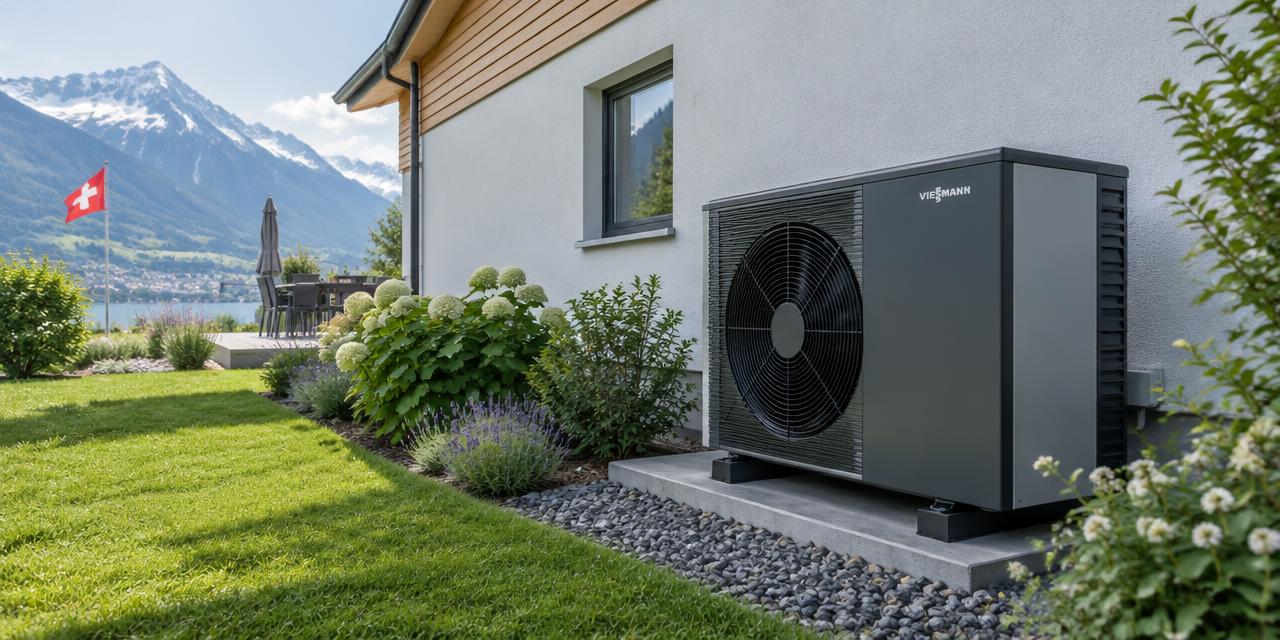
The installation of an air-water heat pump requires special attention to noise pollution. Outdoor air-water heat pumps must meet noise limits towards neighbors.
It is imperative to choose a sensible location, away from rest areas, and to use acoustic shielding if necessary. Respecting neighborly peace is essential to avoid any disputes.
Your installer can help you assess the noise level of the chosen unit and optimize its orientation to minimize disturbances while complying with applicable standards.
The cost of a heat pump varies depending on the model, technology, and specific characteristics of your home. To anticipate your investment, use the RenoIndex calculator to get a price range in CHF adapted to the Swiss context.
Remember to include costs related to any potential work required to adapt your interior heating network. It is also recommended to contact cantonal services to check available grants.
A rigorous budget plan, including annual maintenance, will allow you to enjoy your new sustainable and economical installation with peace of mind.
1. Estimate
Set a budget range with the estimator.
2. Grants
Apply before work starts.
3. Quotes
Compare at least 3 quotes.
4. Permit
Check with the municipality whether a permit is needed.
5. Works
Follow the site and do a written handover.
No specific grant listed for this work. Maintenance tax deductions may still apply.
3988 Obergoms · about 142.9 km
Obergoms-based company specializing in sanitary installations, heating systems, roofing, and tinsmith work for new builds and renovations.
hallenbarter-russi.ch2829 Vermes · about 157.5 km
The website presented under the name Imeri Chauffage et Sanitaire Sàrl offers plumbing, heating and solar thermal work, while F. Imeri Sàrl’s registered purpose refers to a scrap metal business.
imeri-sarl.ch2824 Vicques · about 161.4 km
Specialist since 1968 in sanitary installations, heating (gas, oil, wood, renewable energy), and tinsmithing with 24/7 emergency repair service.
sanit.ch2824 Vicques · about 161.4 km
Buchwalder Sàrl in Vicques has specialized in the installation, repair, and renovation of heating and sanitary systems since 1966.
buchwalder-sarl.chSuggestions from the commercial register by distance and activity. Not an endorsement or partnership.
Most heat pump installations require a building permit or prior notification to the municipality. Check with the planning department in Thal to find out which specific forms need to be filled out. Ensure that your project complies with the noise protection and energy regulations defined by the canton of St. Gallen.
A heat pump is generally effective if the building is properly insulated. In older homes, it may be necessary to improve insulation or adapt radiators to operate at lower temperatures. A professional energy audit is recommended before any major investment to validate technical feasibility and efficiency.
Yes, annual maintenance by a certified professional is highly recommended. This ensures the unit functions correctly, maintains its energy efficiency, extends its lifespan, and ensures compliance with noise limits. Use RenoIndex to estimate ongoing operating costs for your system.
The average lifespan of a heat pump is estimated between 15 and 20 years, depending on the installation quality, intensity of use, and regularity of maintenance. A well-sized system that is properly maintained is the key to maximizing this longevity.