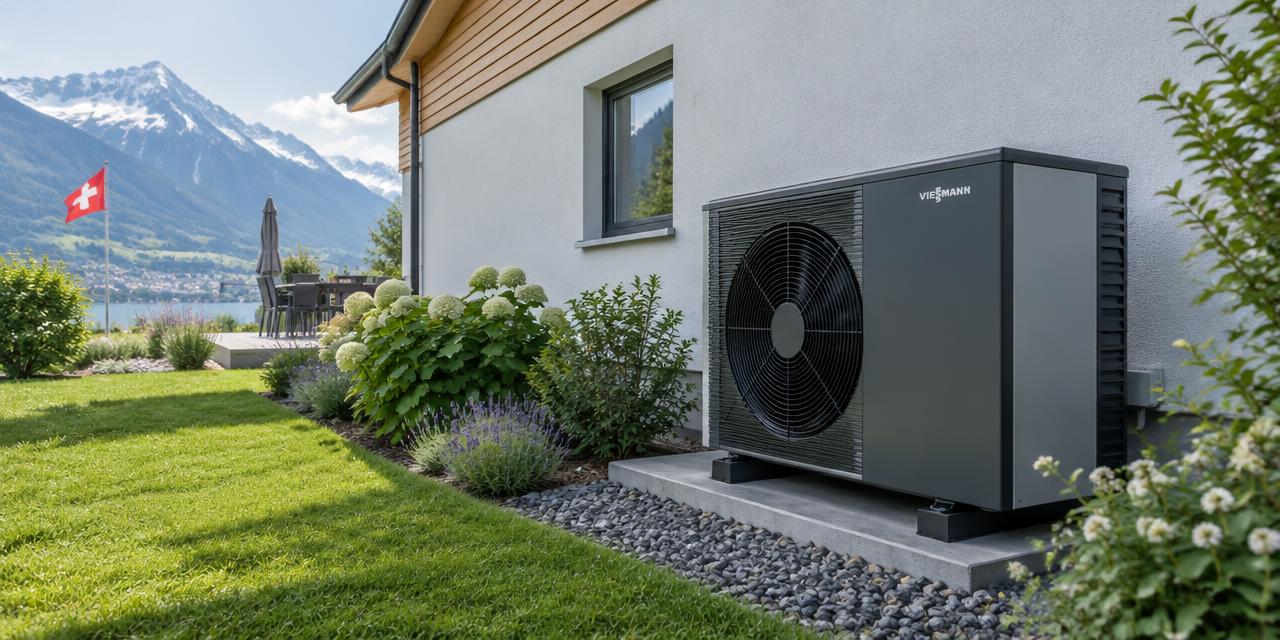
Heat pump installation in Suhr: The complete guide
Switching to a heat pump in Suhr is an excellent decision to optimize your energy efficiency and reduce your carbon footprint. This high-performance system increases the value of your property while ensuring lasting thermal comfort. Before starting your renovation, it is essential to plan every step, from choosing the right technology to assessing your home's specific needs. To get a precise cost estimate tailored to your project, use our free calculation tool on the RenoIndex website today.
At a glance
Typical budget
CHF 37'800 – CHF 70'500
Midpoint
CHF 52'900
Grants found
0
Nearby companies
4
Worked examples in Suhr
Small project
CHF 30'000 – CHF 54'800
Typical project
CHF 37'800 – CHF 70'500
Large project
CHF 49'600 – CHF 93'900
Project
Quantity
Low
High
Per unit
Small project
80 m²
CHF 30'000
CHF 54'800
CHF 500
Typical project
160 m²
CHF 37'800
CHF 70'500
CHF 300
Large project
280 m²
CHF 49'600
CHF 93'900
CHF 300
Computed with our estimator for Suhr (regional factor included), standard finish. Only the project size changes.
Cost split (typical project)
Labour :CHF 21'200(40 %)
Materials :CHF 26'500(50 %)
Other costs :CHF 5'300(10 %)
What the price covers
Included
Supply and installation
VAT
Heat pump and standard connections; removal and equipment only according to answers
Not included
Permits and architect fees
Unexpected structural issues
Possible subsidies
Drilling beyond 150 m, buried or contaminated tank, asbestos, insulation and new finishes
With air-to-air: hot water and ducts only if selected; adaptations beyond the options excluded
Suhr's housing stock in figures
In Suhr, the federal building register lists 1'806 residential buildings and 5'319 dwellings. These municipal benchmarks help put your home in context, but do not replace an individual assessment.
57 %built before 1980
67 %heated by oil or gas
37.8 %electric hot water
1.7 %with declared solar thermal
Age of residential buildings
57 % built before 1980
Before 19191 %
1919–194514 %
1946–196026 %
1961–19709 %
1971–19807 %
1981–199012 %
1991–200013 %
2001–201010 %
Since 20119 %
Construction year does not reveal past renovations: check the current insulation condition.
Main heating energy
34 % · Gas
Gas34 %
Heating oil33 %
Heat pump23 %
Electricity5 %
District heating3 %
Wood3 %
This distribution describes recorded buildings, not your system's consumption or efficiency.
Heating and hot water: which energies?
Energy
Heating
Hot water
Gas
34 %
25 %
Heating oil
33 %
21.4 %
District heating
3 %
2.5 %
Heat pump
23 %
9 %
Electricity
5 %
37.8 %
Wood
3 %
1.1 %
Solar thermal
0 %
1.5 %
Each line gives the share of buildings using that energy, separately for heating and for hot water. The two columns do not always reach 100%: some buildings combine two systems, or reported none.
Type of heating system
Boiler (unspecified)68.5 %
Heat pump22.5 %
Central electric heating4.6 %
Heat exchanger (district)2.5 %
Direct electric heaters0.7 %
Stove0.5 %
A standard non-condensing boiler is usually older and less efficient.
Renovations, heritage and volumes
For your renovation projects in Suhr, understanding the building register data is vital. With 311 out of 1806 buildings under heritage protection, contacting the municipality early regarding permits is essential. The median house volume is 771 m3; however, this figure is based on only 8 buildings measured by the SIA 416 standard out of 1272 houses, indicating a very partial data coverage. Consequently, careful planning remains necessary to accurately determine the scope of heating or insulation work required for your specific property, as official statistics provide limited guidance regarding the structural realities of homes in this municipality.
311
buildings flagged as protected
status known for 1'806 of 1'806 buildings; check with the municipality
Before considering the installation of an individual heat pump, it is crucial to check whether your residential area in Suhr has access to a priority district heating network.
If a collective solution is available, it may prove more advantageous in terms of maintenance and overall sustainability. Consult your sector's energy development plans to determine the best option.
In any case, a rigorous analysis of the local situation allows you to avoid unnecessary investments and choose the most suitable long-term heating solution for your home.
Calculating the necessary thermal capacity
Correctly sizing your heat pump is the key factor for ensuring controlled energy bills. The local design outdoor temperature plays a decisive role here in choosing the appliance's capacity.
A poorly calibrated pump risks consuming too much electricity or failing to heat sufficiently during harsh winters. It is advisable to have a professional thermal study carried out to size your installation precisely.
Use our RenoIndex estimator to get an indicative price range and plan your budget confidently, taking into account the real thermal characteristics of your home.
Compliance with noise and neighbour standards
If you opt for an air-water heat pump installed outdoors, the issue of noise is fundamental. These systems must strictly comply with noise limits towards your neighbours.
Poor fan orientation or positioning too close to property lines can lead to avoidable noise disturbances. Allow for sufficient distance and, if necessary, sound insulation devices.
By respecting these good neighbourly criteria from the design phase, you ensure the success of your project and avoid any potential conflict with the direct neighbourhood during the operation of your new installation.
Managing and monitoring renovation work
The success of your installation in Suhr relies on rigorous management of the work. It is strongly recommended to hire qualified companies with expertise in the field of heat pumps.
Ensure you obtain several detailed quotes to compare the services and brands offered. Proper preparation also includes examining the electrical panel to support the new load.
For better visibility on costs and to avoid any unpleasant surprises, our RenoIndex tool helps you structure your financial expectations in a transparent and efficient manner for your entire project.
Your project in 5 steps
1. Estimate
Set a budget range with the estimator.
2. Grants
Apply before work starts.
3. Quotes
Compare at least 3 quotes.
4. Permit
Check with the municipality whether a permit is needed.
5. Works
Follow the site and do a written handover.
Grants and subsidies
No specific grant listed for this work. Maintenance tax deductions may still apply.
Companies in the area
F. Imeri Sàrl
2829 Vermes · about 45.6 km
The website presented under the name Imeri Chauffage et Sanitaire Sàrl offers plumbing, heating and solar thermal work, while F. Imeri Sàrl’s registered purpose refers to a scrap metal business.
Suggestions from the commercial register by distance and activity. Not an endorsement or partnership.
Frequently asked questions
What is the average lifespan of a heat pump?
Generally, a well-maintained heat pump can operate efficiently for about 15 to 20 years. Annual maintenance by a professional is essential to maximize this longevity and maintain optimal energy performance throughout the system's life, thus ensuring a better return on your investment.
Should I insulate before installing a heat pump?
Yes, it is highly recommended to insulate your home before installing a heat pump. Better insulation reduces heating requirements, allowing for a smaller, less expensive heat pump to be installed. This is the logical step to ensure the maximum efficiency of your new energy investment.
Where can I get reliable cost estimates?
To obtain a realistic price range for your renovation project in Suhr, you can use our online RenoIndex estimator for free. This tool provides you with a reliable basis to budget your work with peace of mind before requesting detailed quotes from local certified installers.
What are the legal noise requirements?
Heat pumps must comply with federal noise protection standards. In practice, this means that the noise level at the windows of neighbours' sleeping rooms must remain below authorized limits. It is recommended to plan for optimal positioning right from the start of the project.