
Eco6therm Sàrl
2832 Rebeuvelier · about 99.5 km
Eco6therm specializes in the installation of heating systems, particularly heat pumps, and solar photovoltaic energy solutions.
eco6therm.chHome solar battery · Schwyz
At a glance
Small project
CHF 3'800 – CHF 8'800
Typical project
CHF 7'000 – CHF 14'900
Large project
CHF 12'000 – CHF 24'700
| Project | Quantity | Low | High | Per unit |
|---|---|---|---|---|
| Small project | 5 kWh | CHF 3'800 | CHF 8'800 | CHF 1'200 |
| Typical project | 10 kWh | CHF 7'000 | CHF 14'900 | CHF 1'000 |
| Large project | 18 kWh | CHF 12'000 | CHF 24'700 | CHF 1'000 |
Computed with our estimator for Schwyz (regional factor included), standard finish. Only the project size changes.
Included
Not included
In Schwyz, the federal building register lists 2'762 residential buildings and 8'109 dwellings. These municipal benchmarks help put your home in context, but do not replace an individual assessment.
51 % built before 1980
Construction year does not reveal past renovations: check the current insulation condition.
45 % · Heating oil
This distribution describes recorded buildings, not your system's consumption or efficiency.
| Energy | Heating | Hot water |
|---|---|---|
| Gas | 3 % | 3.3 % |
| Heating oil | 45 % | 38.6 % |
| District heating | 15 % | 13.2 % |
| Heat pump | 14 % | 3.8 % |
| Electricity | 2 % | 29.2 % |
| Wood | 20 % | 7.2 % |
| Solar thermal | 0 % | 3.5 % |
Each line gives the share of buildings using that energy, separately for heating and for hot water. The two columns do not always reach 100%: some buildings combine two systems, or reported none.
A standard non-condensing boiler is usually older and less efficient.
4 % of buildings mix housing with shops or offices.
For your renovation plans in Schwyz, the federal building register (RegBL) shows that out of 2556 identified buildings, 1 is under heritage protection, requiring early consultation with the municipality for permits. Regarding building volume, data following SIA 416 for 39 houses shows a median of 1006 m3, serving as a reference for sizing heating and insulation works. Please note that data coverage is partial, as 1151 buildings use other standards and renovation year data is not recorded. These figures offer a starting point for your cost estimation while highlighting the need for specific site analysis.
Source : OFS — RegBL (export communal complet). Existing residential buildings; percentages of recorded values.
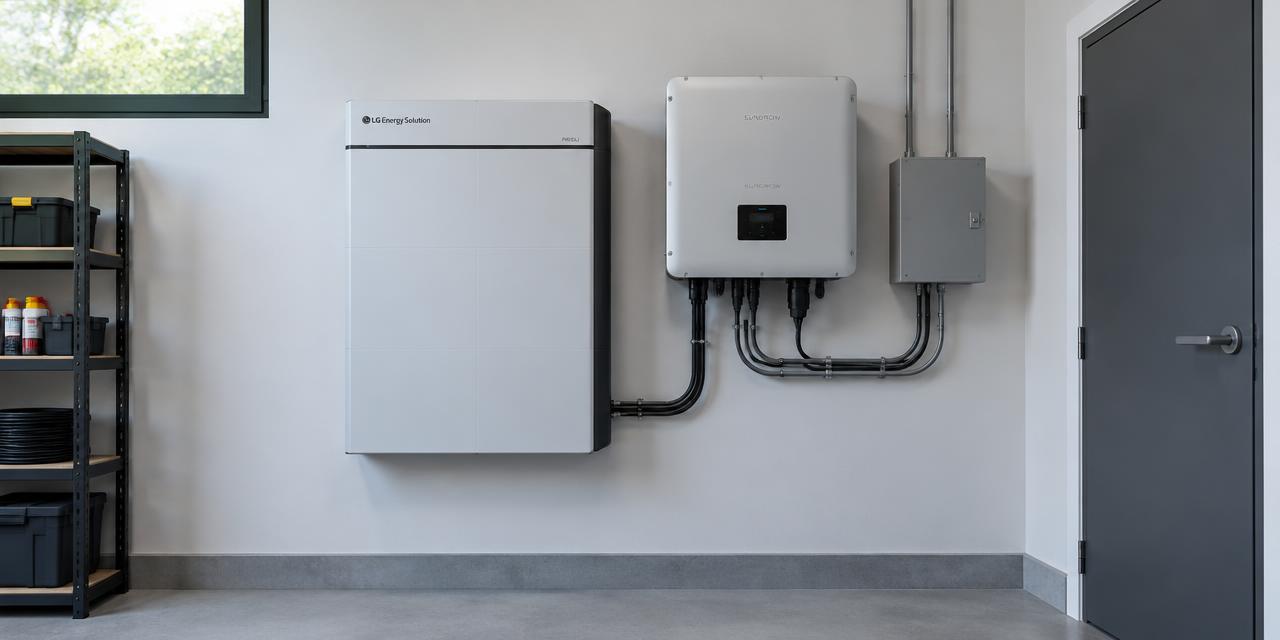
A battery is especially worthwhile when solar output clearly exceeds your daytime use. By storing the surplus, you avoid selling energy to the grid at low rates only to buy it back later at a higher price in the evening.
This turns your home into a power plant capable of covering its own nightly needs.
To assess the return on investment for this technology, the RenoIndex calculator helps you define a realistic price range based on your current configuration and specific storage needs.
It is crucial to size your battery capacity based on evening consumption, not panel power. An oversized battery will unnecessarily increase your initial investment without improving overall efficiency.
Analyze your family's consumption profile to determine the amount of energy needed between sunset and sunrise.
RenoIndex offers a free method to estimate the costs associated with various storage capacities, helping you optimize your budget right from the start of your renovation project.
Before buying, always check compatibility with your existing inverter. Some solar systems require a hybrid inverter to integrate a battery, while others use AC coupling solutions. Poor compatibility can lead to energy losses or additional installation costs.
It is advisable to hire a qualified professional to ensure safety and peak system performance.
Use the RenoIndex calculator to get a clear idea of the budget required, including both labor and technical equipment, to ensure your project is professionally executed.
Careful planning is the key to success. In Schwyz, as in the entire canton of Schwyz, installing a battery must comply with current technical standards and local regulations.
Ensure you consider the physical location, as batteries require a temperate environment to operate efficiently. Once your needs are identified and technical constraints checked, use the RenoIndex tools to get a reliable price range.
This preparation will allow you to approach quotes from local artisans with confidence and complete your project under the best conditions.
1. Estimate
Set a budget range with the estimator.
2. Grants
Apply before work starts.
3. Quotes
Compare at least 3 quotes.
4. Permit
Check with the municipality whether a permit is needed.
5. Works
Follow the site and do a written handover.
No specific grant listed for this work. Maintenance tax deductions may still apply.
2832 Rebeuvelier · about 99.5 km
Eco6therm specializes in the installation of heating systems, particularly heat pumps, and solar photovoltaic energy solutions.
eco6therm.ch3930 Visp · about 101.8 km
TZ Stromag offers comprehensive electrical engineering services for residential buildings, including installations, telematics services, and security.
stromag.ch3930 Visp · about 101.8 km
Steinlin und Partner AG is a Swiss company specializing in electrical installations, energy solutions such as photovoltaics, and IT services.
steinlin.ch3942 Raron · about 102.4 km
TZ Stromag is a full-service provider of electrical engineering for buildings, covering installations, automation, security, and in-house switchgear construction.
stromag.chSuggestions from the commercial register by distance and activity. Not an endorsement or partnership.
Most modern lithium batteries installed in Switzerland offer a lifespan ranging from 10 to 20 years. This longevity depends significantly on the number of charge cycles and the temperature management within your technical room.
In the canton of Schwyz, indoor batteries generally do not require a building permit. However, it is essential to comply with fire safety standards and to register the installation with your local grid operator.
Yes, it is entirely possible. If your current installation is not compatible, you simply need to add an AC coupling system. This device allows the battery to be connected directly to the home grid without modifying the panels.
Costs vary depending on the capacity in kWh and the technology. To get a free estimate tailored to your project in Schwyz, use the RenoIndex simulator, which will provide you with an accurate price range.