
Eco6therm Sàrl
2832 Rebeuvelier · about 102 km
Eco6therm specializes in the installation of heating systems, particularly heat pumps, and solar photovoltaic energy solutions.
eco6therm.chHome solar battery · Einsiedeln
At a glance
Small project
CHF 4'400 – CHF 10'200
Typical project
CHF 8'100 – CHF 17'200
Large project
CHF 13'900 – CHF 28'500
| Project | Quantity | Low | High | Per unit |
|---|---|---|---|---|
| Small project | 5 kWh | CHF 4'400 | CHF 10'200 | CHF 1'400 |
| Typical project | 10 kWh | CHF 8'100 | CHF 17'200 | CHF 1'200 |
| Large project | 18 kWh | CHF 13'900 | CHF 28'500 | CHF 1'100 |
Computed with our estimator for Einsiedeln (regional factor included), standard finish. Only the project size changes.
Included
Not included
In Einsiedeln, the federal building register lists 3'594 residential buildings and 8'266 dwellings. These municipal benchmarks help put your home in context, but do not replace an individual assessment.
49 % built before 1980
Construction year does not reveal past renovations: check the current insulation condition.
36 % · Heating oil
This distribution describes recorded buildings, not your system's consumption or efficiency.
| Energy | Heating | Hot water |
|---|---|---|
| Gas | 10 % | 7.5 % |
| Heating oil | 36 % | 25 % |
| District heating | 3 % | 2.7 % |
| Heat pump | 27 % | 18.5 % |
| Electricity | 8 % | 35.6 % |
| Wood | 15 % | 5.6 % |
| Solar thermal | 0 % | 5 % |
Each line gives the share of buildings using that energy, separately for heating and for hot water. The two columns do not always reach 100%: some buildings combine two systems, or reported none.
A standard non-condensing boiler is usually older and less efficient.
9.3 % of buildings mix housing with shops or offices.
For renovation planning in Einsiedeln, federal building register figures provide vital guidance. With only 4 buildings under heritage protection, contacting the municipality early is recommended to clarify permit requirements for your specific property. The median house volume is 943 m3, which serves as a key metric for estimating the scale of heating or insulation improvements. Please note that data coverage is partial, as only 64 buildings were measured according to the SIA 416 standard. Additionally, information regarding the renovation year is unavailable, which limits the scope of these official statistics for your project calculations.
Source : OFS — RegBL (export communal complet). Existing residential buildings; percentages of recorded values.
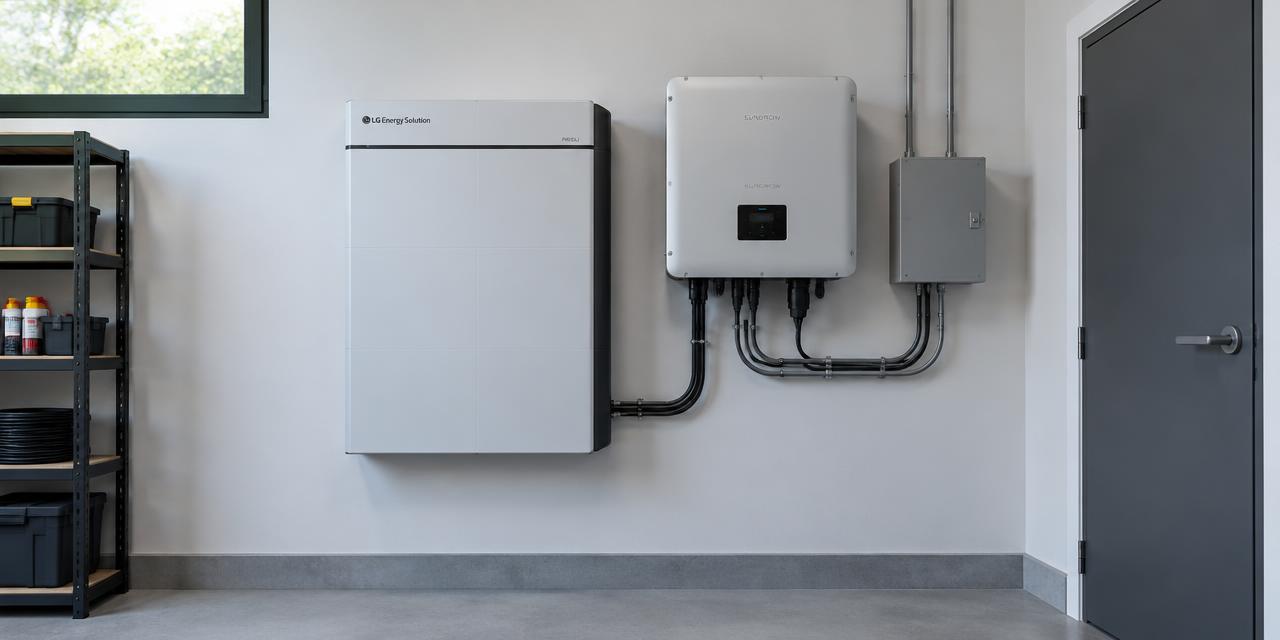
A battery is worthwhile when solar output clearly exceeds your daytime use, which is common during sunny days in Einsiedeln. By storing excess electricity instead of feeding it back into the grid, you maximize your self-consumption.
This reduces your reliance on grid electricity rates during peak times when energy is more expensive. Use the free RenoIndex estimator to get an indicative price range for your project.
A well-thought-out system transforms your photovoltaic installation into an energy source available 24 hours a day.
Sizing is a crucial step for your return on investment. You should size the battery capacity based on your evening consumption, not just the power of your solar panels.
A battery that is too large represents an unnecessary cost, while a battery that is too small will not cover your needs. Analyze your annual energy habits to determine the ideal size.
RenoIndex helps estimate the cost of various capacities based on options available in the Swiss market, ensuring sizing adapted to your actual home requirements.
Before buying a storage system, it is mandatory to check compatibility with your existing inverter. Some systems require specific hybrid inverters, while others can be added as AC-coupled.
A professional installation ensures not only electrical safety but also performance optimization of your storage system. Do not hesitate to request multiple quotes to compare offers.
The free RenoIndex estimator helps you understand cost structures before contacting local installers in Einsiedeln for more detailed technical expertise on your setup.
Investing in a solar battery is a long-term project. Beyond the equipment cost, you must factor in installation and commissioning fees.
Although subsidies may vary at the cantonal or federal level, it is always recommended to plan your budget while considering the durability of the chosen equipment. The RenoIndex estimator offers transparency regarding average prices in the region.
Proper financial planning allows you to adjust your expectations and choose a reliable system that will last for many years.
1. Estimate
Set a budget range with the estimator.
2. Grants
Apply before work starts.
3. Quotes
Compare at least 3 quotes.
4. Permit
Check with the municipality whether a permit is needed.
5. Works
Follow the site and do a written handover.
No specific grant listed for this work. Maintenance tax deductions may still apply.
2832 Rebeuvelier · about 102 km
Eco6therm specializes in the installation of heating systems, particularly heat pumps, and solar photovoltaic energy solutions.
eco6therm.ch2735 Malleray · about 110.6 km
Company specialized in electrical installations and telecommunications systems, including network infrastructure and related trade.
telecrengglisa.ch3930 Visp · about 112.3 km
TZ Stromag offers comprehensive electrical engineering services for residential buildings, including installations, telematics services, and security.
stromag.ch3930 Visp · about 112.3 km
Steinlin und Partner AG is a Swiss company specializing in electrical installations, energy solutions such as photovoltaics, and IT services.
steinlin.chSuggestions from the commercial register by distance and activity. Not an endorsement or partnership.
Generally, indoor solar batteries do not require a special permit, but always check local building regulations in the canton of Schwyz for specific or outdoor installations. Ensure you comply with current fire safety standards.
Most modern lithium batteries installed in Switzerland have a lifespan of 10 to 20 years, depending on the technology and the number of charge cycles. Optimal management preserves capacity over the long term.
For electrical safety reasons and to maintain the manufacturer's warranty, it is highly recommended to hire a qualified professional for the installation of your solar battery.
Savings depend on your personal consumption and your electricity provider's tariff. Use the RenoIndex estimator to estimate installation costs, then calculate your reduction based on the grid price per kWh.