
Eco6therm Sàrl
2832 Rebeuvelier · about 80.6 km
Eco6therm specializes in the installation of heating systems, particularly heat pumps, and solar photovoltaic energy solutions.
eco6therm.chHome solar battery · Risch
At a glance
Small project
CHF 3'800 – CHF 8'800
Typical project
CHF 7'000 – CHF 14'900
Large project
CHF 12'000 – CHF 24'700
| Project | Quantity | Low | High | Per unit |
|---|---|---|---|---|
| Small project | 5 kWh | CHF 3'800 | CHF 8'800 | CHF 1'200 |
| Typical project | 10 kWh | CHF 7'000 | CHF 14'900 | CHF 1'000 |
| Large project | 18 kWh | CHF 12'000 | CHF 24'700 | CHF 1'000 |
Computed with our estimator for Risch (regional factor included), standard finish. Only the project size changes.
Included
Not included
In Risch, the federal building register lists 1'111 residential buildings and 4'879 dwellings. These municipal benchmarks help put your home in context, but do not replace an individual assessment.
35 % built before 1980
Construction year does not reveal past renovations: check the current insulation condition.
40 % · Heat pump
This distribution describes recorded buildings, not your system's consumption or efficiency.
| Energy | Heating | Hot water |
|---|---|---|
| Gas | 18 % | 18.9 % |
| Heating oil | 27 % | 25.6 % |
| District heating | 2 % | 1.1 % |
| Heat pump | 40 % | 14.8 % |
| Electricity | 5 % | 31 % |
| Wood | 8 % | 5.3 % |
| Solar thermal | 0 % | 2.2 % |
Each line gives the share of buildings using that energy, separately for heating and for hot water. The two columns do not always reach 100%: some buildings combine two systems, or reported none.
A standard non-condensing boiler is usually older and less efficient.
10.8 % of buildings mix housing with shops or offices.
For renovation projects in Risch, official building register data provides essential context. Heritage protection is significant, with 392 of the 435 known buildings listed, necessitating early contact with municipal authorities regarding permit requirements. Regarding building volume, data coverage is partial as all 553 recorded houses use standards other than SIA 416, which complicates scaling assessments for heating and insulation upgrades. We recommend verifying these local specifics thoroughly before finalising your renovation strategy, as these factors directly influence both your planning permission process and the technical scope of the structural improvements required for your property.
Source : OFS — RegBL (export communal complet). Existing residential buildings; percentages of recorded values.
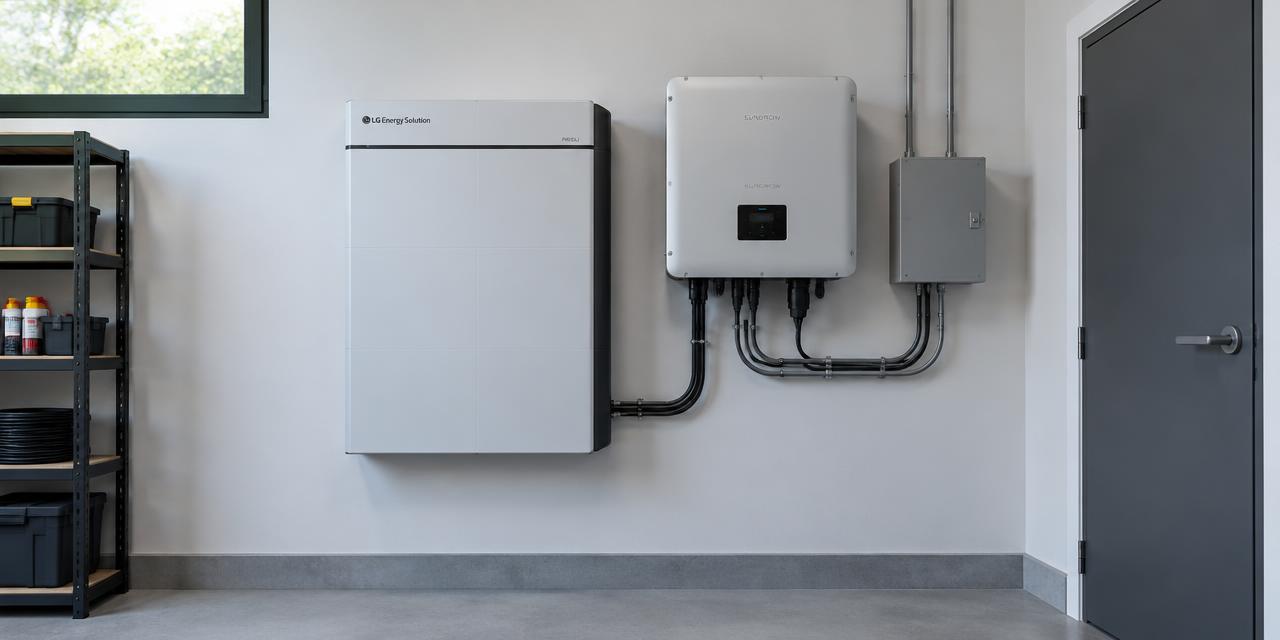
A battery is worthwhile when solar output clearly exceeds your daytime use. By storing energy, you become less dependent on the public grid and reduce your electricity bills over the long term.
The goal is to use as much of the energy produced on your roof as possible for daily domestic needs. If you have high evening consumption, storage becomes an indispensable ally.
Consider checking your household's load profile before starting, in order to maximize the return on investment of your solar installation.
Size capacity by evening consumption, not panel power. Unnecessary oversizing would increase your costs without any real gain. It is crucial to analyze your lifestyle habits to choose a battery that truly covers your nightly needs without waste.
A balanced approach allows you to achieve the best performance-to-cost ratio. Do not hesitate to check RenoIndex to get clear budget estimates for different storage capacities, thereby facilitating your decision-making for your home in Risch.
Check compatibility with your existing inverter before buying. Some systems are designed to be hybrid and easily integrate a battery, while others require additional equipment. A poorly thought-out installation can lead to significant energy efficiency losses.
Ensure the chosen hardware communicates perfectly with your current photovoltaic installation.
It is often advisable to seek the advice of a qualified professional to validate the technical specifications of your storage project in Risch before making any final purchase of expensive hardware.
Succeeding in your storage project in Risch requires methodical planning. Beyond choosing the battery, you must consider the available space and temperature conditions for optimal component operation.
Remember to compare the technological options available on the Swiss market. Our RenoIndex tool supports you by providing a transparent price range for your installation.
Good preparation ensures that you get the most out of your solar investment while actively contributing to the local energy transition.
1. Estimate
Set a budget range with the estimator.
2. Grants
Apply before work starts.
3. Quotes
Compare at least 3 quotes.
4. Permit
Check with the municipality whether a permit is needed.
5. Works
Follow the site and do a written handover.
No specific grant listed for this work. Maintenance tax deductions may still apply.
2832 Rebeuvelier · about 80.6 km
Eco6therm specializes in the installation of heating systems, particularly heat pumps, and solar photovoltaic energy solutions.
eco6therm.ch2735 Malleray · about 89.1 km
Company specialized in electrical installations and telecommunications systems, including network infrastructure and related trade.
telecrengglisa.ch2605 Sonceboz-Sombeval · about 96.3 km
Solar conseil Sàrl specializes in the installation of photovoltaic power plants, energy storage solutions, and energy efficiency consulting in the Jura and Bernese Jura regions.
solarconseil.ch3213 Liebistorf · about 98.7 km
Enosis develops biomethanation technologies to convert CO2 and surplus electricity into storable and sustainable green gas.
enosis-energies.comSuggestions from the commercial register by distance and activity. Not an endorsement or partnership.
A battery allows you to store the surplus energy produced during the day for use in the evening or at night. This increases your self-consumption rate and reduces your dependence on the power grid, thereby optimizing your overall photovoltaic investment.
The ideal capacity depends on your usual nightly consumption. There is no need to aim too big. Analyze your bills and lifestyle habits to determine the optimal size that will maximize your return on investment without unnecessary additional costs.
No, you must absolutely check for compatibility. Some inverters are hybrid and designed for storage, others are not. Always check the technical specifications before purchasing to avoid costly integration problems during the installation.
Use the free RenoIndex service to get a personalized price range. Our tool gives you a reliable estimate adapted to the specifics of your energy renovation project in Risch, thus facilitating your financial and technical planning.