
Eco6therm Sàrl
2832 Rebeuvelier · about 105.6 km
Eco6therm specializes in the installation of heating systems, particularly heat pumps, and solar photovoltaic energy solutions.
eco6therm.chHome solar battery · Rapperswil-Jona
At a glance
Small project
CHF 4'400 – CHF 10'200
Typical project
CHF 8'100 – CHF 17'200
Large project
CHF 13'900 – CHF 28'500
| Project | Quantity | Low | High | Per unit |
|---|---|---|---|---|
| Small project | 5 kWh | CHF 4'400 | CHF 10'200 | CHF 1'400 |
| Typical project | 10 kWh | CHF 8'100 | CHF 17'200 | CHF 1'200 |
| Large project | 18 kWh | CHF 13'900 | CHF 28'500 | CHF 1'100 |
Computed with our estimator for Rapperswil-Jona (regional factor included), standard finish. Only the project size changes.
Included
Not included
In Rapperswil-Jona, the federal building register lists 3'786 residential buildings and 14'034 dwellings. These municipal benchmarks help put your home in context, but do not replace an individual assessment.
53 % built before 1980
Construction year does not reveal past renovations: check the current insulation condition.
42 % · Heat pump
This distribution describes recorded buildings, not your system's consumption or efficiency.
| Energy | Heating | Hot water |
|---|---|---|
| Gas | 41 % | 38.1 % |
| Heating oil | 13 % | 11.6 % |
| District heating | 0 % | 1.4 % |
| Heat pump | 42 % | 39.4 % |
| Electricity | 2 % | 3.8 % |
| Wood | 2 % | 1.4 % |
| Solar thermal | 0 % | 3.9 % |
Each line gives the share of buildings using that energy, separately for heating and for hot water. The two columns do not always reach 100%: some buildings combine two systems, or reported none.
A standard non-condensing boiler is usually older and less efficient.
11 % of buildings mix housing with shops or offices.
For homeowners planning renovations in Rapperswil-Jona, official RegBL figures provide essential planning guidance. Regarding heritage protection, 78 buildings are identified as protected out of 403 known cases, making early coordination with municipal authorities regarding permits vital. The median building volume of 590 cubic meters, based on the SIA 416 standard, helps estimate the scale required for heating or insulation upgrades. Please note that data coverage is partial; only 3 buildings are measured under the SIA 416 standard, and there is no recorded information regarding renovation years for the 3786 total buildings registered in the municipality.
Source : OFS — RegBL (export communal complet). Existing residential buildings; percentages of recorded values.
A battery is worthwhile when solar output clearly exceeds your daytime use. Without storage, excess energy is fed into the grid at a rate often lower than the electricity purchase cost.
By storing this surplus, you reduce your reliance on the power grid during evening or morning demand peaks.
This enhances your initial investment in solar panels while protecting you against future energy price fluctuations, allowing you to consume your own clean energy much more effectively throughout the year.
Size capacity by evening consumption, not panel power. It is crucial to analyze your actual consumption habits to avoid costly oversizing. Excessively high capacity will never be fully utilized, while capacity that is too low will limit your savings.
Study your smart meter data to identify your average night-time usage. The goal is to find the perfect balance point where the self-consumption rate is maximized without unnecessary investment.
Check the RenoIndex simulator to evaluate the costs associated with different battery sizes tailored for your specific home.
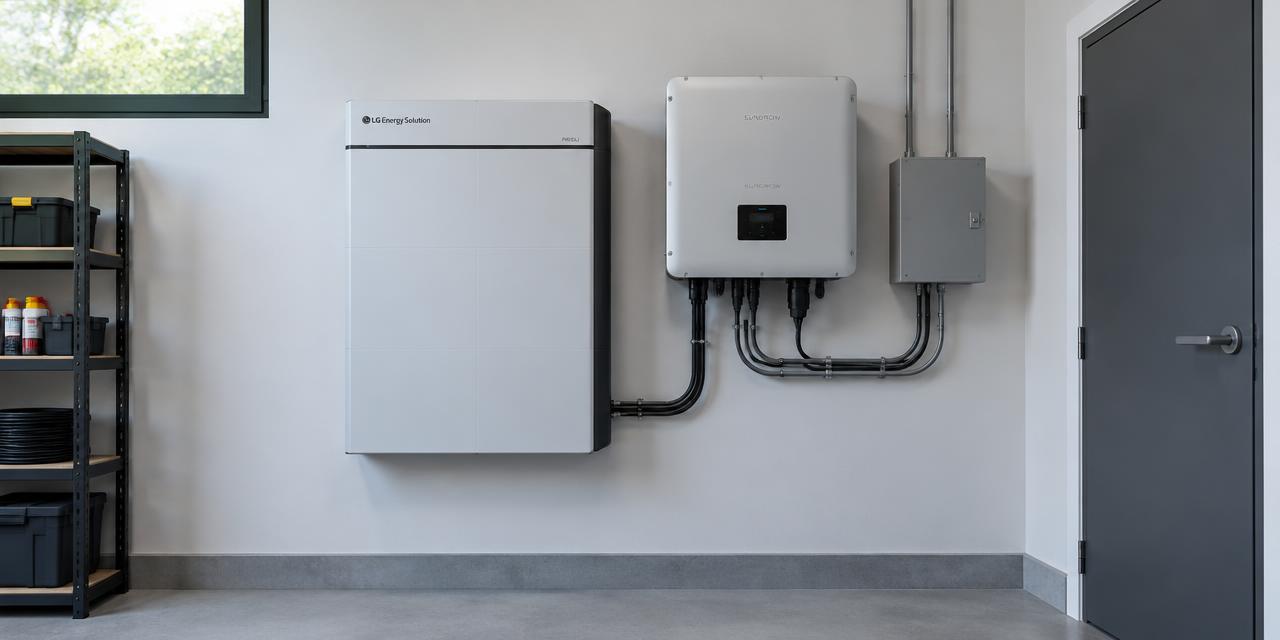
Check compatibility with your existing inverter before buying. If your current system does not allow for a battery addition, a hybrid inverter or an additional AC-coupling system might be necessary, which will impact the total budget.
It is recommended to hire a certified electrician who can validate the technical suitability of the components. Successful integration depends as much on hardware quality as on software configuration.
Use the free RenoIndex tool to get a clear overview of costs including installation and materials for your project in Rapperswil-Jona.
Investing in a solar battery is a long-term commitment. Beyond direct savings on your electricity bill, this system increases the value of your property. Technology is advancing rapidly, offering longer life cycles and better energy density.
Although the initial price is significant, the cost of grid electricity tends to rise, which gradually reduces the payback period. Remember to compare different available brands.
RenoIndex supports you in this process by providing realistic price ranges to help you plan your energy storage project with peace of mind.
1. Estimate
Set a budget range with the estimator.
2. Grants
Apply before work starts.
3. Quotes
Compare at least 3 quotes.
4. Permit
Check with the municipality whether a permit is needed.
5. Works
Follow the site and do a written handover.
No specific grant listed for this work. Maintenance tax deductions may still apply.
2832 Rebeuvelier · about 105.6 km
Eco6therm specializes in the installation of heating systems, particularly heat pumps, and solar photovoltaic energy solutions.
eco6therm.ch2735 Malleray · about 115.3 km
Company specialized in electrical installations and telecommunications systems, including network infrastructure and related trade.
telecrengglisa.ch2605 Sonceboz-Sombeval · about 123.2 km
Solar conseil Sàrl specializes in the installation of photovoltaic power plants, energy storage solutions, and energy efficiency consulting in the Jura and Bernese Jura regions.
solarconseil.ch3930 Visp · about 124.8 km
TZ Stromag offers comprehensive electrical engineering services for residential buildings, including installations, telematics services, and security.
stromag.chSuggestions from the commercial register by distance and activity. Not an endorsement or partnership.
Most modern solar batteries use lithium-ion or lithium-iron-phosphate technology. They generally offer a lifespan of between 10 and 20 years depending on usage. Performance may decrease over time, but the system remains functional. Always check the specific manufacturer's warranty for details regarding expected capacity retention.
Generally, installing a battery inside your home does not require a building permit. However, ensure that the electrical installation meets current Swiss safety standards and is carried out by a qualified professional to guarantee compliance with federal guidelines regarding electrical safety and installation practices.
Yes, it is perfectly possible to add a battery to an existing installation. You may need to add a hybrid inverter or an AC-coupled storage system. An installer will be able to verify the technical compatibility with your existing solar panels and setup.
The market for storage technology is evolving rapidly. Thanks to economies of scale and innovations, component prices tend to decrease over the long term. Use the RenoIndex simulator to get current market prices and plan your budget with confidence for your energy project.