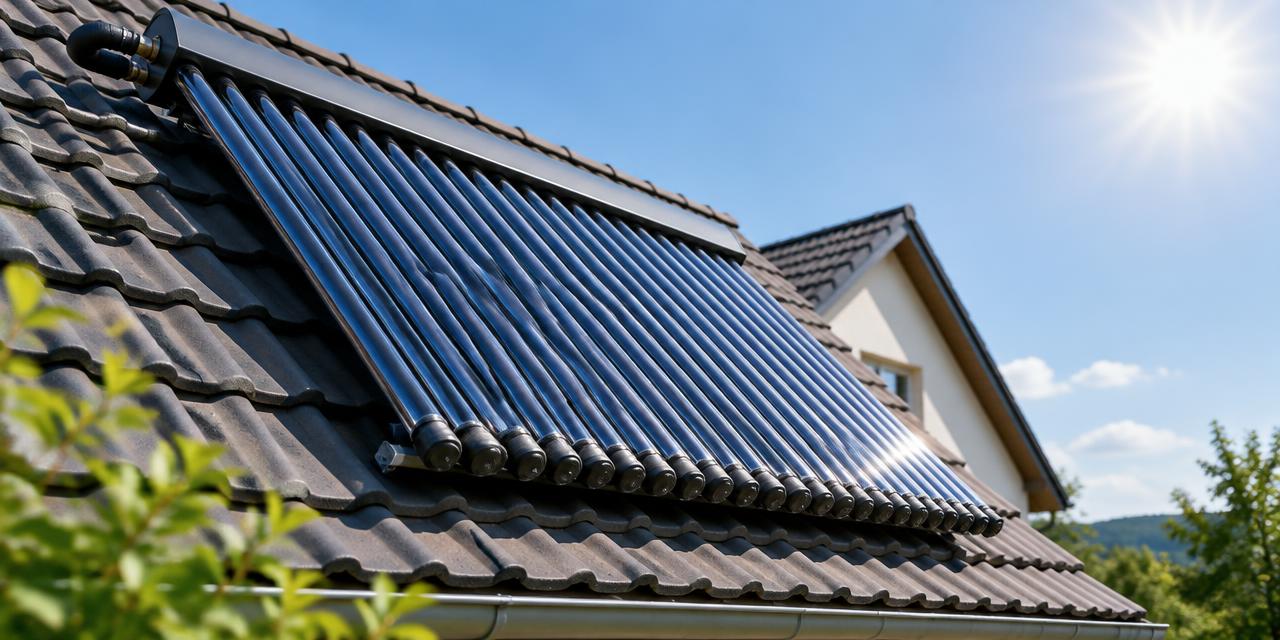
Solar water heating in Meggen: A comprehensive guide
Are you considering installing solar thermal panels in Meggen to produce hot water? This is a great way to increase your property value while reducing energy bills. While every project is unique, understanding technical basics and options is essential. To get a reliable cost estimate tailored to your specific situation, feel free to use our free online RenoIndex tool, which will provide you with an accurate price range in just a few clicks to help you plan your renovation project efficiently.
At a glance
Typical budget
CHF 11'500 – CHF 26'600
Midpoint
CHF 18'400
Grants found
0
Nearby companies
4
Worked examples in Meggen
Small project
CHF 8'900 – CHF 20'800
Typical project
CHF 11'500 – CHF 26'600
Large project
CHF 15'700 – CHF 36'200
Project
Quantity
Low
High
Per unit
Small project
3 m²
CHF 8'900
CHF 20'800
CHF 4'800
Typical project
6 m²
CHF 11'500
CHF 26'600
CHF 3'100
Large project
11 m²
CHF 15'700
CHF 36'200
CHF 2'300
Computed with our estimator for Meggen (regional factor included), standard finish. Only the project size changes.
Cost split (typical project)
Labour :CHF 7'400(40 %)
Materials :CHF 9'200(50 %)
Other costs :CHF 1'800(10 %)
What the price covers
Included
Supply and installation
VAT
Collectors, controls, standard connection and tank according to answers
Not included
Permits and architect fees
Unexpected structural issues
Possible subsidies
Roof refurbishment and replacement of main heating
Meggen's housing stock in figures
In Meggen, the federal building register lists 1'411 residential buildings and 3'775 dwellings. These municipal benchmarks help put your home in context, but do not replace an individual assessment.
48 %built before 1980
46 %heated by oil or gas
17.9 %electric hot water
3.2 %with declared solar thermal
Age of residential buildings
48 % built before 1980
Before 19192 %
1919–194510 %
1946–19609 %
1961–197012 %
1971–198015 %
1981–199014 %
1991–200013 %
2001–201012 %
Since 201114 %
Construction year does not reveal past renovations: check the current insulation condition.
Main heating energy
49 % · Heat pump
Heat pump49 %
Heating oil31 %
Gas15 %
Electricity3 %
Wood3 %
This distribution describes recorded buildings, not your system's consumption or efficiency.
Heating and hot water: which energies?
Energy
Heating
Hot water
Gas
15 %
12.8 %
Heating oil
31 %
27.4 %
Heat pump
49 %
37.1 %
Electricity
3 %
17.9 %
Wood
3 %
1.9 %
Solar thermal
0 %
1.5 %
Each line gives the share of buildings using that energy, separately for heating and for hot water. The two columns do not always reach 100%: some buildings combine two systems, or reported none.
Type of heating system
Heat pump48.5 %
Boiler (unspecified)41.1 %
Condensing boiler4 %
Central electric heating2.7 %
Standard boiler1.9 %
Stove1.1 %
A standard non-condensing boiler is usually older and less efficient.
Houses or apartment buildings?
Single-family houses54.7 %
Two-dwelling houses15 %
Apartment buildings (3+)30.3 %
3.8 % of buildings mix housing with shops or offices.
The typical building
storeys (median)
3
median footprint
182 m²
median dwelling area
107 m²
Renovations, heritage and volumes
Planning a renovation in Meggen requires consulting official registry data. Out of 1411 buildings, 346 are listed as heritage protected, though the status remains unknown for 1028, indicating partial data coverage. Always contact local authorities early regarding permits. Furthermore, 772 residential buildings lack recorded measurements under the SIA 416 standard, which impacts your ability to accurately calculate the scale of heating or insulation upgrades. As information regarding the renovation year is null for the registered properties, homeowners should focus on conducting thorough site assessments to better understand the structural requirements before starting any energy efficiency projects.
346
buildings flagged as protected
status known for 383 of 1'411 buildings; check with the municipality
Solar thermal collectors capture energy from sunlight to heat a transfer fluid. This fluid then transfers the heat to a water tank.
Generally, solar thermal collectors cover a large portion of your hot water needs during the summer months, allowing you to put your main boiler on standby.
It is important to note that these systems differ from photovoltaic panels as they produce heat rather than electricity.
Proper sizing is crucial to optimize the efficiency of the installation relative to your actual needs and ensure long-term performance for your household.
Technical integration and hybridization
Integrating solar thermal into an existing home requires careful consideration of the current heating system. Combining collectors with a heat pump is a popular option, but it absolutely requires a sizing study carried out by a qualified professional.
This study ensures that both systems work in synergy, avoiding oversizing or energy losses. A well-designed installation maximizes your energy self-consumption rate while ensuring long-term reliability, regardless of seasonal variations in sunshine in Meggen.
Proper coordination of components is the key step to achieving an efficient and effective result for your home.
Support and financial grants
We recommend that you regularly check for updates to the federal and cantonal 'Buildings Program' before starting your work. These grants can significantly reduce your initial investment.
To get a clear view of the net costs after potential subsidies, use the RenoIndex simulator and consult local professionals specialized in solar energy who are familiar with current regulations.
Tips for a successful project
The success of a solar thermal installation relies on careful preparation. Start by assessing your roof condition and orientation, as south-facing is ideal.
Request multiple quotes to compare technologies, especially between flat-plate and vacuum tube collectors. Ensure the installer has the necessary certifications to work safely. Remember that RenoIndex remains your best ally for estimating your overall budget.
By planning well, you turn your home into a more ecological building while improving your general thermal comfort and increasing the long-term efficiency of your energy system.
Your project in 5 steps
1. Estimate
Set a budget range with the estimator.
2. Grants
Apply before work starts.
3. Quotes
Compare at least 3 quotes.
4. Permit
Check with the municipality whether a permit is needed.
5. Works
Follow the site and do a written handover.
Grants and subsidies
No specific grant listed for this work. Maintenance tax deductions may still apply.
Companies in the area
F. Imeri Sàrl
2829 Vermes · about 73.8 km
The website presented under the name Imeri Chauffage et Sanitaire Sàrl offers plumbing, heating and solar thermal work, while F. Imeri Sàrl’s registered purpose refers to a scrap metal business.
Suggestions from the commercial register by distance and activity. Not an endorsement or partnership.
Frequently asked questions
What is the lifespan of a solar installation?
A well-maintained solar thermal installation typically lasts between 20 and 25 years. The control system and pumps may require more regular maintenance after the first decade, but the collectors themselves are very durable and resistant to the Swiss climate conditions.
Do I need a building permit in Meggen?
The need for a permit depends on the nature and visibility of the installation. It is advisable to contact the planning department of the municipality of Meggen to confirm current local regulations regarding rooftop installations before signing any quotes.
Does the system work when it's cloudy?
Yes, solar thermal collectors use diffuse radiation even on cloudy days. Although production is lower than on a sunny day, the system still contributes to heating the water, thereby reducing the load on your main boiler.
How do I estimate the total cost of the project?
Use the free RenoIndex simulator to get a realistic price range. By entering your property details, you will receive market-based estimates to help you plan your budget effectively before reaching out to professionals for detailed quotes.