
F. Imeri Sàrl
2829 Vermes · about 47 km
The website presented under the name Imeri Chauffage et Sanitaire Sàrl offers plumbing, heating and solar thermal work, while F. Imeri Sàrl’s registered purpose refers to a scrap metal business.
imeri-sarl.chHeat pump installation · Gränichen
At a glance
Small project
CHF 30'000 – CHF 54'800
Typical project
CHF 37'800 – CHF 70'500
Large project
CHF 49'600 – CHF 93'900
| Project | Quantity | Low | High | Per unit |
|---|---|---|---|---|
| Small project | 80 m² | CHF 30'000 | CHF 54'800 | CHF 500 |
| Typical project | 160 m² | CHF 37'800 | CHF 70'500 | CHF 300 |
| Large project | 280 m² | CHF 49'600 | CHF 93'900 | CHF 300 |
Computed with our estimator for Gränichen (regional factor included), standard finish. Only the project size changes.
Included
Not included
In Gränichen, the federal building register lists 2'024 residential buildings and 3'867 dwellings. These municipal benchmarks help put your home in context, but do not replace an individual assessment.
57 % built before 1980
Construction year does not reveal past renovations: check the current insulation condition.
50 % · Heating oil
This distribution describes recorded buildings, not your system's consumption or efficiency.
| Energy | Heating | Hot water |
|---|---|---|
| Gas | 6 % | 2.7 % |
| Heating oil | 50 % | 31.1 % |
| Heat pump | 33 % | 6.4 % |
| Electricity | 4 % | 56.3 % |
| Wood | 7 % | 2.5 % |
Each line gives the share of buildings using that energy, separately for heating and for hot water. The two columns do not always reach 100%: some buildings combine two systems, or reported none.
A standard non-condensing boiler is usually older and less efficient.
For your renovation plans in Gränichen, official registers indicate that 488 buildings are subject to heritage protection, making it essential to contact municipal authorities early regarding necessary permits. Regarding building size, the median volume for 26 measured houses is 921 m3 according to the SIA 416 standard, providing a vital reference point for scaling insulation and heating upgrades. Please note that data coverage is partial, as 1555 houses currently lack measurements based on this specific standard. Evaluating these figures carefully will help you prepare an accurate budget and ensure your renovation project proceeds smoothly within local requirements.
Source : OFS — RegBL (export communal complet). Existing residential buildings; percentages of recorded values.
Before committing to a heat pump purchase, the first logical step is to check whether your area can connect to a priority district heating network. In some neighbourhoods, this option is preferred for collective energy efficiency reasons.
If a network is available nearby, it may prove to be a simpler and more cost-effective alternative to installing an individual system. Contact your local authorities to learn about municipal energy development plans.
This due diligence will save you from making unnecessary investments in technology that might not align with local energy strategies.
The capacity of your future heat pump must be chosen carefully. The local design outdoor temperature sets the heat pump's capacity. This ensures your system can effectively heat your home even on the coldest days of the year.
Under-sizing will compromise your comfort, while over-sizing leads to short cycling and premature wear.
A qualified heating engineer must perform a precise thermal assessment of your home to determine the ideal size, considering your current insulation levels and the total volume of the rooms being heated.
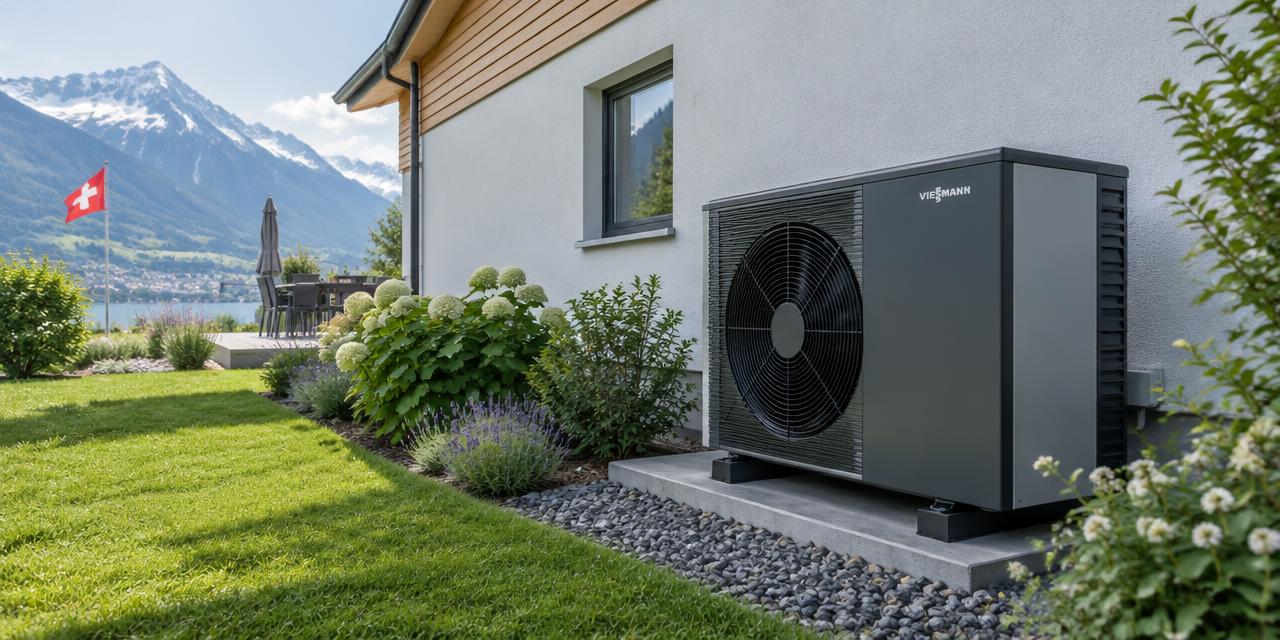
If you choose an air-water heat pump with an outdoor unit, noise management is a crucial aspect for maintaining good neighbourly relations. Outdoor air-water heat pumps must meet noise limits towards neighbours.
It is essential to choose a strategic location, away from bedroom windows or relaxation areas, and consider acoustic covers if necessary.
Before installation, ensure the chosen model complies with noise regulations to prevent future disputes and ensure a harmonious living environment within your neighbourhood in Gränichen.
Investing in a heat pump is significant but usually pays off over the long term through energy savings. The total cost depends on the chosen technology, installation complexity, and potential upgrades to your current heating system.
To obtain a realistic price range for your project, use the free RenoIndex simulator. This tool provides a clear overview of expected expenses without any obligation.
It will help you prepare your financing before contacting local companies for detailed quotes and comparing the best available offers on the market.
1. Estimate
Set a budget range with the estimator.
2. Grants
Apply before work starts.
3. Quotes
Compare at least 3 quotes.
4. Permit
Check with the municipality whether a permit is needed.
5. Works
Follow the site and do a written handover.
No specific grant listed for this work. Maintenance tax deductions may still apply.
2829 Vermes · about 47 km
The website presented under the name Imeri Chauffage et Sanitaire Sàrl offers plumbing, heating and solar thermal work, while F. Imeri Sàrl’s registered purpose refers to a scrap metal business.
imeri-sarl.ch2824 Vicques · about 51.2 km
Specialist since 1968 in sanitary installations, heating (gas, oil, wood, renewable energy), and tinsmithing with 24/7 emergency repair service.
sanit.ch2824 Vicques · about 51.2 km
Buchwalder Sàrl in Vicques has specialized in the installation, repair, and renovation of heating and sanitary systems since 1966.
buchwalder-sarl.ch2824 Vicques · about 51.2 km
Gyger Haustechnik specializes in sanitary installations, heating systems, bathroom renovations, and tiling work.
gyger-co.chSuggestions from the commercial register by distance and activity. Not an endorsement or partnership.
Yes, in most cases, installing a heat pump requires a building permit. We recommend contacting your municipal building department to learn about the specific procedures and verify the local regulations currently in force in Gränichen.
On average, a well-maintained heat pump has a lifespan of between 15 and 20 years. Annual maintenance performed by a professional is essential to guarantee its efficiency and extend its longevity as much as possible.
Modern technology has significantly reduced the noise level of heat pumps. However, the outdoor unit remains audible. Optimal placement and compliance with safety distances ensure quiet operation, minimizing disturbance to your neighbours.
Yes, good insulation is highly recommended. It reduces heating requirements, allows for a smaller heat pump size, and significantly improves the overall energy efficiency of your home, reducing your ongoing heating costs.