
Eco6therm Sàrl
2832 Rebeuvelier · about 151.4 km
Eco6therm specializes in the installation of heating systems, particularly heat pumps, and solar photovoltaic energy solutions.
eco6therm.chHome solar battery · Grabs
At a glance
Small project
CHF 3'900 – CHF 8'900
Typical project
CHF 7'100 – CHF 15'100
Large project
CHF 12'200 – CHF 24'900
| Project | Quantity | Low | High | Per unit |
|---|---|---|---|---|
| Small project | 5 kWh | CHF 3'900 | CHF 8'900 | CHF 1'200 |
| Typical project | 10 kWh | CHF 7'100 | CHF 15'100 | CHF 1'000 |
| Large project | 18 kWh | CHF 12'200 | CHF 24'900 | CHF 1'000 |
Computed with our estimator for Grabs (regional factor included), standard finish. Only the project size changes.
Included
Not included
In Grabs, the federal building register lists 2'120 residential buildings and 3'549 dwellings. These municipal benchmarks help put your home in context, but do not replace an individual assessment.
58 % built before 1980
Construction year does not reveal past renovations: check the current insulation condition.
31 % · District heating
This distribution describes recorded buildings, not your system's consumption or efficiency.
| Energy | Heating | Hot water |
|---|---|---|
| Gas | 6 % | 6.1 % |
| Heating oil | 16 % | 15.2 % |
| District heating | 31 % | 30.1 % |
| Heat pump | 25 % | 24.3 % |
| Electricity | 1 % | 10.5 % |
| Wood | 20 % | 6.7 % |
| Solar thermal | 0 % | 7.1 % |
Each line gives the share of buildings using that energy, separately for heating and for hot water. The two columns do not always reach 100%: some buildings combine two systems, or reported none.
A standard non-condensing boiler is usually older and less efficient.
11.4 % of buildings mix housing with shops or offices.
For your renovation plans in Grabs, please note that the federal building register data is currently partial. With a median house volume of 776 m3 calculated from a sample of 30 buildings based on the SIA 416 standard, these figures provide a baseline for estimating the scale of your heating or insulation upgrades. As the register covers 2120 buildings, please be aware that information regarding renovation years is unavailable and no properties are recorded as protected heritage sites. Consequently, you should rely on professional on-site assessments for these specific aspects while using the volume data as a reference.
Source : OFS — RegBL (export communal complet). Existing residential buildings; percentages of recorded values.
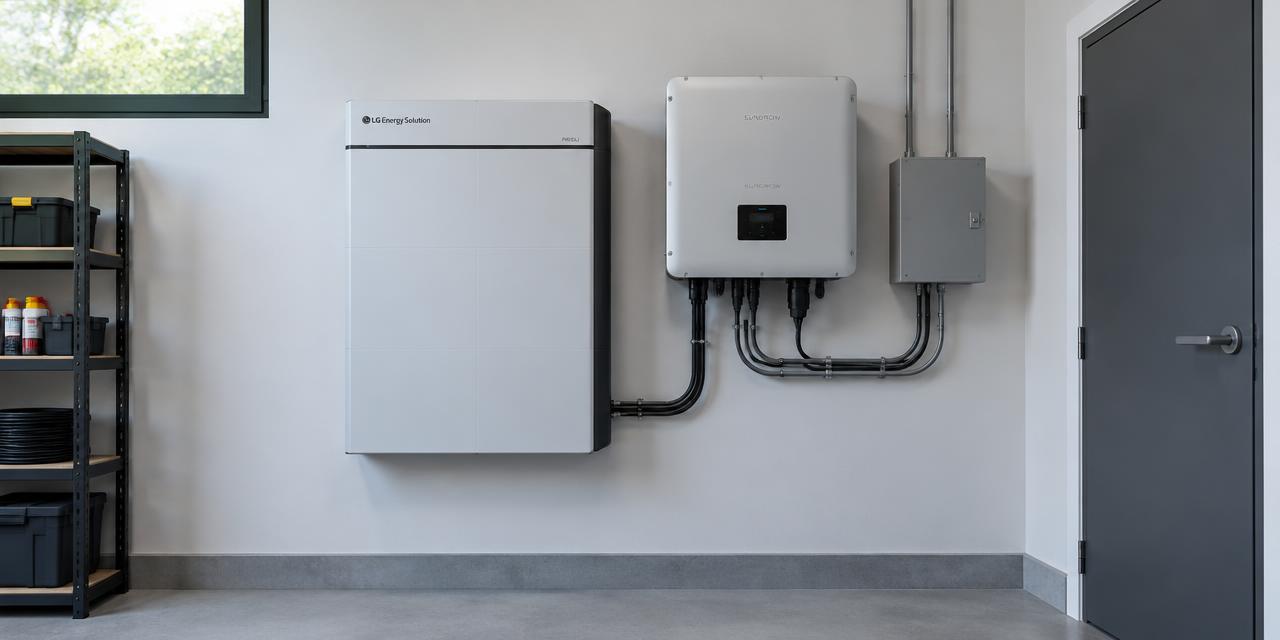
A battery is worthwhile when solar output clearly exceeds your daytime use. By storing the surplus, you avoid feeding all the energy back into the grid and maximize your domestic self-consumption during dark hours.
This reduces your reliance on external suppliers and allows you to use energy produced locally on your roof.
To assess the cost of such an investment and see potential savings, do not hesitate to consult RenoIndex to obtain a clear price range in Swiss francs.
Size capacity by evening consumption, not panel power. It is unnecessary to oversize a battery if your nighttime usage is low. The goal is to reach a balance between maximum storage capacity and hardware purchase costs.
A rigorous review of your consumption habits is necessary before selecting a specific model. To get a quantified estimate based on your home type, use our RenoIndex estimator, which provides a price range to guide you with confidence.
Check compatibility with your existing inverter before buying. If your current system does not allow for battery retrofitting, an upgrade might be necessary, which will impact the total cost of the work.
Hire certified professionals for the installation to ensure safety and electrical compliance.
To anticipate expenses related to this technical installation, the RenoIndex simulator helps you visualize average market costs for your energy-related renovation works.
The planning of a storage system should be thought out for the long term. Consider the potential evolution of your consumption, such as purchasing an electric vehicle or installing a heat pump, which could increase your energy needs.
By grouping renovation projects together, you might optimize labor costs. Use RenoIndex to get a reliable cost estimate.
Our tool allows you to plan your energy renovation work in Grabs transparently, without obligation and with a clear view of the necessary budget.
1. Estimate
Set a budget range with the estimator.
2. Grants
Apply before work starts.
3. Quotes
Compare at least 3 quotes.
4. Permit
Check with the municipality whether a permit is needed.
5. Works
Follow the site and do a written handover.
No specific grant listed for this work. Maintenance tax deductions may still apply.
2832 Rebeuvelier · about 151.4 km
Eco6therm specializes in the installation of heating systems, particularly heat pumps, and solar photovoltaic energy solutions.
eco6therm.ch3930 Visp · about 152 km
TZ Stromag offers comprehensive electrical engineering services for residential buildings, including installations, telematics services, and security.
stromag.ch3930 Visp · about 152 km
Steinlin und Partner AG is a Swiss company specializing in electrical installations, energy solutions such as photovoltaics, and IT services.
steinlin.ch3942 Raron · about 154.1 km
TZ Stromag is a full-service provider of electrical engineering for buildings, covering installations, automation, security, and in-house switchgear construction.
stromag.chSuggestions from the commercial register by distance and activity. Not an endorsement or partnership.
There are currently no specific federal or cantonal grants for home batteries in Grabs. However, we recommend checking local incentive programs as they may change. Use our RenoIndex estimator to get a precise view of your installation costs.
Modern solar batteries are designed to be almost maintenance-free. Regular monitoring of your energy management software is usually sufficient to ensure the system is working correctly. For any technical questions about equipment, feel free to check RenoIndex to estimate your future needs.
Most solar batteries have a lifespan of between 10 and 20 years depending on the technology type and usage cycles. RenoIndex helps you calculate the profitability of your project based on this durability.
The cost depends on the model and the technical complexity of the installation. RenoIndex is the ideal tool to get a free estimate and a price range in Swiss francs adapted to your project in Grabs.