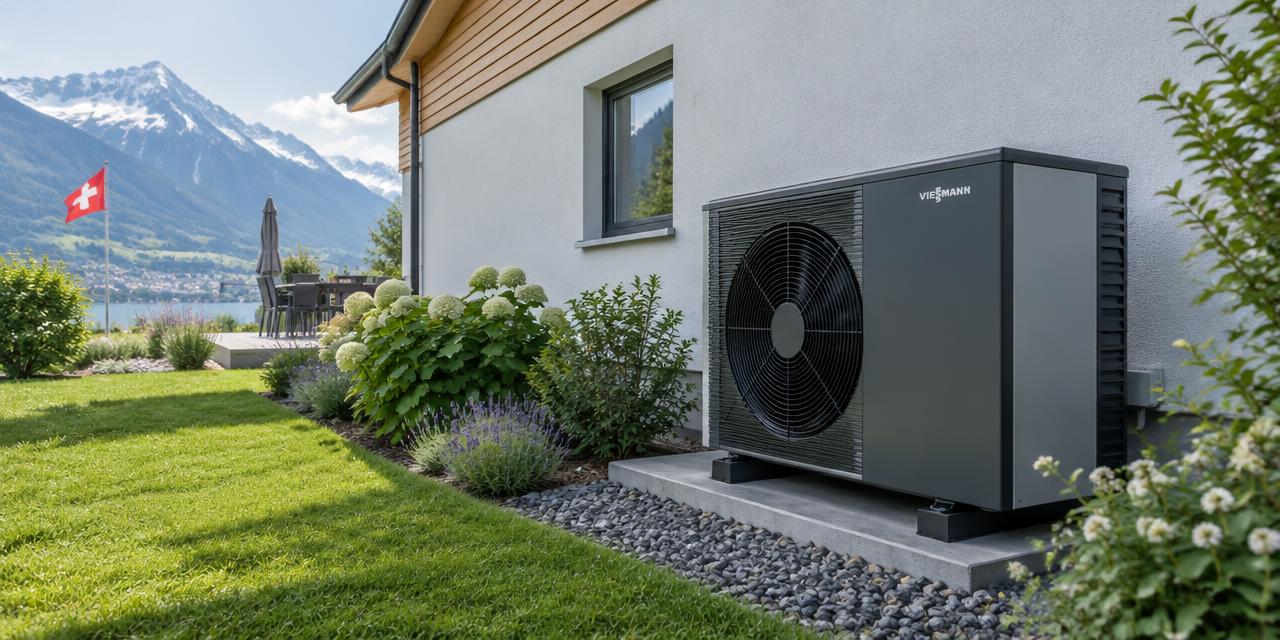
Indicative price, tips, grants and companies for your project in Düdingen (Fribourg).
At a glance
Typical budget
CHF 38'600 – CHF 71'900
Midpoint
CHF 54'000
Grants found
1
Nearby companies
4
Worked examples in Düdingen
Small project
CHF 30'600 – CHF 55'900
Typical project
CHF 38'600 – CHF 71'900
Large project
CHF 50'600 – CHF 95'800
Project
Quantity
Low
High
Per unit
Small project
80 m²
CHF 30'600
CHF 55'900
CHF 500
Typical project
160 m²
CHF 38'600
CHF 71'900
CHF 300
Large project
280 m²
CHF 50'600
CHF 95'800
CHF 300
Computed with our estimator for Düdingen (regional factor included), standard finish. Only the project size changes.
Cost split (typical project)
Labour :CHF 21'600(40 %)
Materials :CHF 27'000(50 %)
Other costs :CHF 5'400(10 %)
What the price covers
Included
Supply and installation
VAT
Heat pump and standard connections; removal and equipment only according to answers
Not included
Permits and architect fees
Unexpected structural issues
Possible subsidies
Drilling beyond 150 m, buried or contaminated tank, asbestos, insulation and new finishes
With air-to-air: hot water and ducts only if selected; adaptations beyond the options excluded
Düdingen's housing stock in figures
In Düdingen, the federal building register lists 1'590 residential buildings and 4'265 dwellings. These municipal benchmarks help put your home in context, but do not replace an individual assessment.
49 %built before 1980
27 %heated by oil or gas
41.3 %electric hot water
2.6 %with declared solar thermal
Age of residential buildings
49 % built before 1980
Before 191911 %
1919–19457 %
1946–19607 %
1961–197010 %
1971–198014 %
1981–199014 %
1991–200014 %
2001–201010 %
Since 201113 %
Construction year does not reveal past renovations: check the current insulation condition.
Main heating energy
54 % · Heat pump
Heat pump54 %
Heating oil24 %
District heating7 %
Wood7 %
Electricity5 %
Gas3 %
This distribution describes recorded buildings, not your system's consumption or efficiency.
Heating and hot water: which energies?
Energy
Heating
Hot water
Gas
3 %
2.9 %
Heating oil
24 %
22 %
District heating
7 %
5 %
Heat pump
54 %
21.5 %
Electricity
5 %
41.3 %
Wood
7 %
4.7 %
Solar thermal
0 %
2.1 %
Each line gives the share of buildings using that energy, separately for heating and for hot water. The two columns do not always reach 100%: some buildings combine two systems, or reported none.
Type of heating system
Heat pump54.4 %
Boiler (unspecified)32.9 %
Heat exchanger (district)6.2 %
Central electric heating5 %
Condensing boiler0.9 %
A standard non-condensing boiler is usually older and less efficient.
Renovations, heritage and volumes
For your renovation plans in Düdingen, RegBL data provides vital benchmarks. With 9 protected buildings out of 1590, heritage status is clearly defined, although data coverage remains partial. The median building volume is 765 m3 according to SIA 416, a critical metric for scaling heating or insulation upgrades. Note that this measurement covers only 21 out of 958 recorded houses, with others using different standards. We strongly advise contacting the municipality early in your planning process to discuss any heritage requirements and ensure your project complies with local regulations regarding the scale and nature of your intended renovations.
9
buildings flagged as protected
status known for 69 of 1'590 buildings; check with the municipality
Based in Granges-Paccot, Cossa Cotting Sanitaires SA provides plumbing and heating installations, bathroom renovations, and maintenance and repair of these systems.
Humbert Marcel et Fils SA in Granges-Paccot lists earthworks, civil engineering, masonry, and heating and sanitary installations among its registered activities; the supplied website text concerns a different company.
Suggestions from the commercial register by distance and activity. Not an endorsement or partnership.
Useful local data
Rules of the canton of Fribourg
These rules apply across the whole canton, not only in this town.
Fossil heating rules
Note : Les exigences spécifiques s'appliquent aux bâtiments existants en cas de remplacement de chauffages à énergies fossiles ou électriques. Ces exigences ne s'appliquent pas si le remplacement est dû à un événement imprévisible et que l'installation initiale a moins de 15 ans, ou si des mesures d'efficacité énergétique ont été réalisées récemment pour un coût élevé, ou si le remplacement est pour un chauffage à bois déjà présent dans le même bâtiment ou sur la même parcelle, ou si l'autorité l'estime disproportionné. Les communes peuvent prévoir des exigences supplémentaires.
Legal basis : Règlement d'exécution de la loi cantonale sur l'énergie (RLE)
In force since : 1er janvier 2024
Heating replacement : En cas de remplacement d'une installation de chauffage ou d'eau chaude sanitaire fonctionnant aux énergies fossiles ou par des chauffages électriques, au moins 10 % de la chaleur nécessaire sont couverts par des énergies renouvelables ou par la chaleur à distance, ou des mesures permettant une économie de chaleur équivalente sont réalisées.
Renewable share required : 10 % de la chaleur nécessaire
Carry-forward : L'excédent des frais d'investissement en matière d'énergie, d'efficacité énergétique et de protection de l'environnement peut être reporté sur les deux périodes fiscales suivantes.
Flat rate deduction : 20% (pour immeubles de plus de 10 ans); 10% (pour immeubles de moins de 10 ans)
Maintenance costs : Au choix: soit déduction des frais effectifs, soit un forfait de 20% de la valeur locative (20% de l'état locatif ou du revenu brut des immeubles) pour les immeubles de plus de 10 ans. Pour les immeubles de moins de 10 ans, le forfait est de 10%.
Energy investments : Les investissements en matière d'énergie renouvelable, d'amélioration de l'efficacité énergétique et de protection de l'environnement, ainsi que les frais de démolition en vue d'une construction de remplacement, sont déductibles. Si les frais déductibles dépassent le revenu de l'immeuble pour la période fiscale courante, l'excédent peut être reporté sur les deux périodes fiscales suivantes.