
Eco6therm Sàrl
2832 Rebeuvelier · about 167.6 km
Eco6therm specializes in the installation of heating systems, particularly heat pumps, and solar photovoltaic energy solutions.
eco6therm.chHome solar battery · Au (SG)
At a glance
Small project
CHF 3'900 – CHF 8'900
Typical project
CHF 7'100 – CHF 15'100
Large project
CHF 12'200 – CHF 24'900
| Project | Quantity | Low | High | Per unit |
|---|---|---|---|---|
| Small project | 5 kWh | CHF 3'900 | CHF 8'900 | CHF 1'200 |
| Typical project | 10 kWh | CHF 7'100 | CHF 15'100 | CHF 1'000 |
| Large project | 18 kWh | CHF 12'200 | CHF 24'900 | CHF 1'000 |
Computed with our estimator for Au (SG) (regional factor included), standard finish. Only the project size changes.
Included
Not included
In Au (SG), the federal building register lists 1'541 residential buildings and 4'070 dwellings. These municipal benchmarks help put your home in context, but do not replace an individual assessment.
54 % built before 1980
Construction year does not reveal past renovations: check the current insulation condition.
38 % · Heat pump
This distribution describes recorded buildings, not your system's consumption or efficiency.
| Energy | Heating | Hot water |
|---|---|---|
| Gas | 32 % | 21.3 % |
| Heating oil | 28 % | 21.2 % |
| Heat pump | 38 % | 32.8 % |
| Electricity | 1 % | 17.6 % |
| Wood | 2 % | 0.3 % |
| Solar thermal | 0 % | 6.7 % |
Each line gives the share of buildings using that energy, separately for heating and for hot water. The two columns do not always reach 100%: some buildings combine two systems, or reported none.
A standard non-condensing boiler is usually older and less efficient.
10.1 % of buildings mix housing with shops or offices.
For your renovation projects in Au, data from the federal building register indicates that at least 9 buildings are subject to heritage protection, requiring early coordination with the municipality to secure necessary permits. Please note that data coverage is partial for certain indicators: information regarding the year of renovation and building volume according to the SIA 416 standard is not available in the current records. We advise you to verify these technical specifications directly with local authorities before proceeding with modernization plans or insulation upgrades to ensure your project aligns with municipal requirements and building standards.
Source : OFS — RegBL (export communal complet). Existing residential buildings; percentages of recorded values.
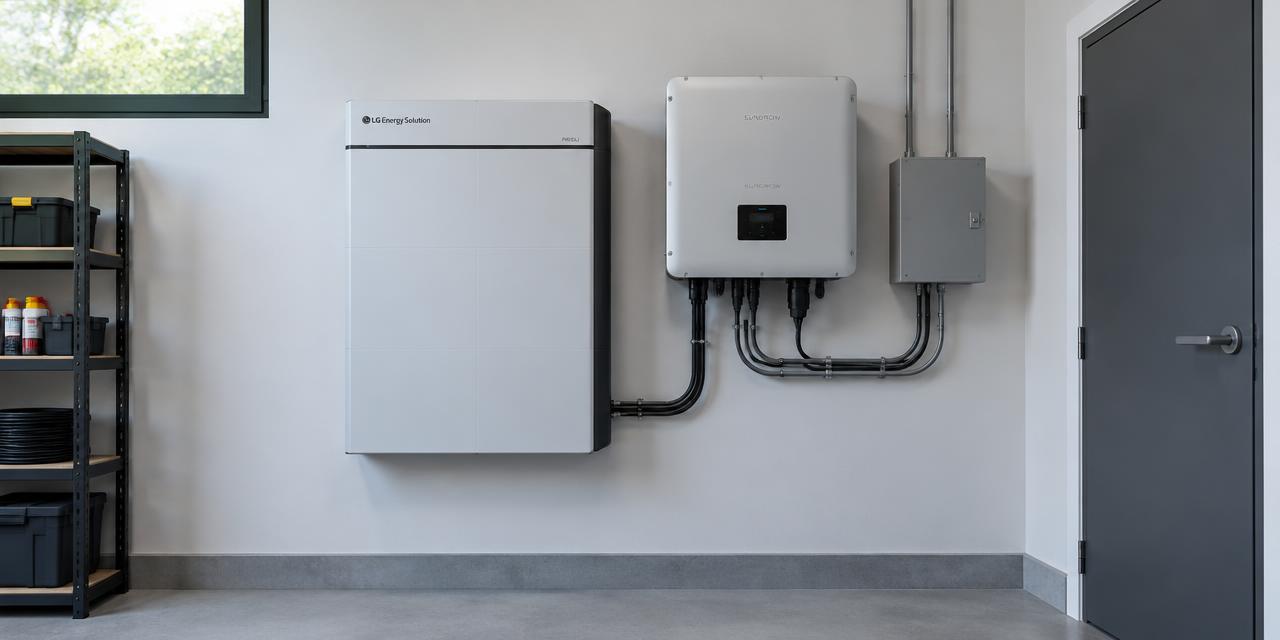
Energy storage transforms your photovoltaic system. During sunny periods, your panels often produce more than your home consumes immediately. Without storage, this surplus is injected into the grid.
With a battery, this energy is kept for evening use or demand spikes. This allows you to cover your evening energy needs, reducing your overall bill. RenoIndex helps you estimate your budget for a high-performance installation.
Remember to check compatibility with your existing inverter before buying to ensure a smooth installation. Proper sizing ensures your system is optimized for your specific home consumption patterns.
A successful project requires rigorous sizing. A common mistake is to base capacity only on panel power. It is better to size capacity by evening consumption, not panel power.
Analyze your consumption habits to choose a battery that matches your actual use after sunset. A system that is too large represents an unnecessary cost, while a system that is too small will not cover your needs.
Use the RenoIndex estimator to explore different price options and capacities available on the current Swiss market to ensure you find the right balance.
Before any installation, ensure your hardware is compatible. Check compatibility with your existing inverter before buying your new storage unit.
Some inverters are hybrid models, which greatly simplifies adding a battery, while others require additional components like a second dedicated storage inverter.
A professional installer can assess the state of your current infrastructure to avoid unexpected costs. To get reliable price ranges for storage solutions, consult the RenoIndex website.
Meticulous technical preparation secures your investment and ensures an optimal lifespan for your system.
A solar battery requires little maintenance, but regular monitoring is recommended. Modern systems often include apps to track charge cycles and battery health. Avoid exposing the unit to extreme temperatures to preserve its capacity over the years.
By following manufacturer recommendations, you maximize the lifespan of your equipment. If you are planning to add a battery, remember to use RenoIndex to get a cost estimate and compare different technologies.
Good maintenance ensures your investment continues to provide significant savings throughout its service life.
1. Estimate
Set a budget range with the estimator.
2. Grants
Apply before work starts.
3. Quotes
Compare at least 3 quotes.
4. Permit
Check with the municipality whether a permit is needed.
5. Works
Follow the site and do a written handover.
No specific grant listed for this work. Maintenance tax deductions may still apply.
2832 Rebeuvelier · about 167.6 km
Eco6therm specializes in the installation of heating systems, particularly heat pumps, and solar photovoltaic energy solutions.
eco6therm.ch2735 Malleray · about 178.7 km
Company specialized in electrical installations and telecommunications systems, including network infrastructure and related trade.
telecrengglisa.ch3930 Visp · about 183.6 km
TZ Stromag offers comprehensive electrical engineering services for residential buildings, including installations, telematics services, and security.
stromag.ch3930 Visp · about 183.6 km
Steinlin und Partner AG is a Swiss company specializing in electrical installations, energy solutions such as photovoltaics, and IT services.
steinlin.chSuggestions from the commercial register by distance and activity. Not an endorsement or partnership.
Most modern solar batteries have a lifespan between 10 and 20 years. This longevity depends heavily on the quality of the technology and usage conditions, such as respecting charge cycles. Use RenoIndex to estimate your project costs and find the right solution.
It is not strictly required, but highly recommended to simplify installation. A hybrid inverter manages current from both panels and battery directly. With a standard inverter, you might need a second one dedicated to storage. Check compatibility details at RenoIndex.
Costs vary based on storage capacity and the specific technical requirements of your home. To get a precise, personalized price range without obligation, access the free RenoIndex estimator. This will help you plan your budget before contacting local installers.
Yes, if your production regularly exceeds your daytime consumption. By storing surplus, you avoid buying grid electricity in the evening, increasing your self-consumption rate. Use the RenoIndex estimator to calculate if this investment will be profitable for your specific situation.