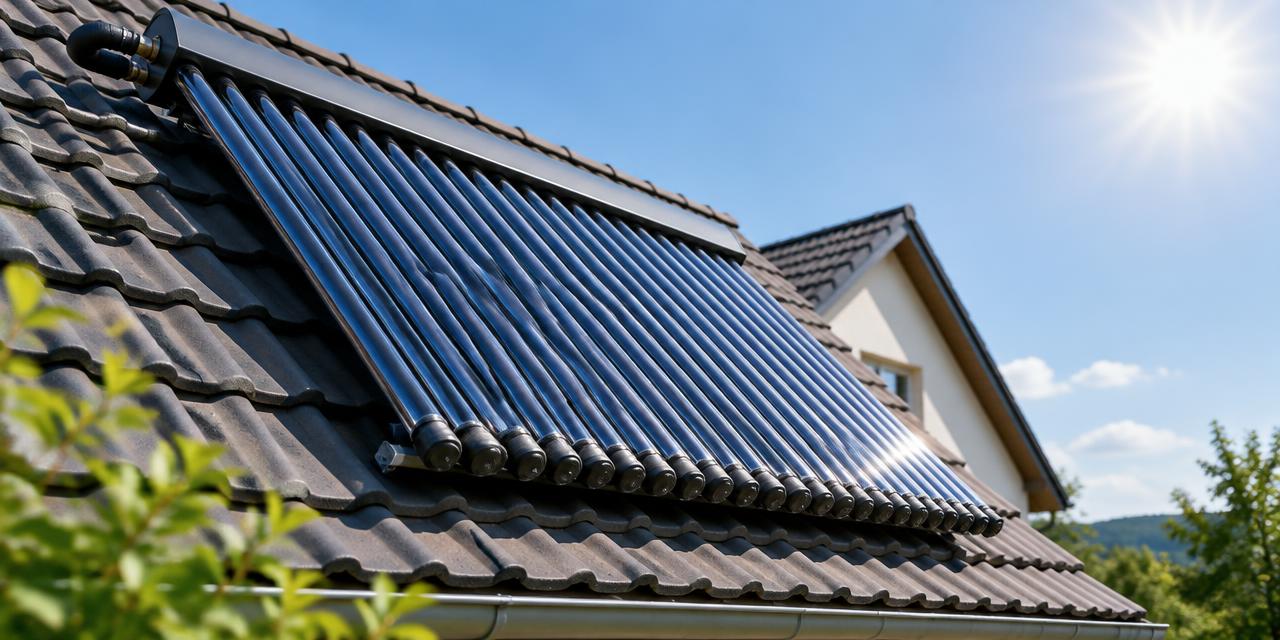
Solar water heating in Arth: Your renovation guide
Are you planning to install solar water heating in Arth to lower your energy bills? This technology converts solar radiation into heat for your domestic hot water. Whether you are in the project phase or still considering your options, thorough planning is essential. Discover our advice for your energy transition in the canton of Schwyz. To get a precise and free estimate of your project costs, use the RenoIndex online estimator today to start your renovation journey with complete peace of mind.
At a glance
Typical budget
CHF 11'500 – CHF 26'600
Midpoint
CHF 18'400
Grants found
0
Nearby companies
4
Worked examples in Arth
Small project
CHF 8'900 – CHF 20'800
Typical project
CHF 11'500 – CHF 26'600
Large project
CHF 15'700 – CHF 36'200
Project
Quantity
Low
High
Per unit
Small project
3 m²
CHF 8'900
CHF 20'800
CHF 4'800
Typical project
6 m²
CHF 11'500
CHF 26'600
CHF 3'100
Large project
11 m²
CHF 15'700
CHF 36'200
CHF 2'300
Computed with our estimator for Arth (regional factor included), standard finish. Only the project size changes.
Cost split (typical project)
Labour :CHF 7'400(40 %)
Materials :CHF 9'200(50 %)
Other costs :CHF 1'800(10 %)
What the price covers
Included
Supply and installation
VAT
Collectors, controls, standard connection and tank according to answers
Not included
Permits and architect fees
Unexpected structural issues
Possible subsidies
Roof refurbishment and replacement of main heating
Arth's housing stock in figures
In Arth, the federal building register lists 2'039 residential buildings and 5'895 dwellings. These municipal benchmarks help put your home in context, but do not replace an individual assessment.
47 %built before 1980
45 %heated by oil or gas
47 %electric hot water
1.9 %with declared solar thermal
Age of residential buildings
47 % built before 1980
Before 191915 %
1919–19456 %
1946–19609 %
1961–19708 %
1971–19809 %
1981–199011 %
1991–200017 %
2001–201011 %
Since 201115 %
Construction year does not reveal past renovations: check the current insulation condition.
Main heating energy
41 % · Heating oil
Heating oil41 %
Heat pump30 %
Wood15 %
Electricity6 %
Gas4 %
District heating4 %
This distribution describes recorded buildings, not your system's consumption or efficiency.
Heating and hot water: which energies?
Energy
Heating
Hot water
Gas
4 %
3.2 %
Heating oil
41 %
26.5 %
District heating
4 %
4.3 %
Heat pump
30 %
8.5 %
Electricity
6 %
47 %
Wood
15 %
8.3 %
Solar thermal
0 %
2 %
Each line gives the share of buildings using that energy, separately for heating and for hot water. The two columns do not always reach 100%: some buildings combine two systems, or reported none.
Type of heating system
Boiler (unspecified)54.6 %
Heat pump30.2 %
Central electric heating4.5 %
Stove4.5 %
Heat exchanger (district)3.9 %
Direct electric heaters1.1 %
Condensing boiler0.7 %
A standard non-condensing boiler is usually older and less efficient.
Houses or apartment buildings?
Single-family houses52.6 %
Two-dwelling houses19.9 %
Apartment buildings (3+)27.5 %
Other0 %
12.4 % of buildings mix housing with shops or offices.
The typical building
storeys (median)
3
median footprint
124 m²
median dwelling area
90 m²
Renovations, heritage and volumes
For renovation planning in Arth, RegBL figures provide vital guidance despite partial data coverage. With a median volume of 889 m3 across the 50 buildings measured per SIA 416, this figure helps determine the scale of necessary heating or insulation upgrades. Out of 2039 total buildings, heritage status is known for 74, with 2 buildings officially protected. If your property is classified under these records, contacting the municipality early is essential. Heritage status significantly impacts permit requirements, so early engagement ensures your renovation plans comply with local preservation regulations and helps streamline the approval process for your specific project.
2
buildings flagged as protected
status known for 74 of 2'039 buildings; check with the municipality
Solar thermal collectors capture energy from the sun to heat a transfer fluid, which then delivers this heat to your water tank. These systems are particularly effective during sunny months.
Solar thermal collectors usually cover much of summer hot water, significantly reducing the load on your main boiler. Proper orientation, ideally facing south, is essential for optimal performance.
This solution is ideal for private homes looking to improve energy efficiency by harnessing natural resources, thereby reducing reliance on conventional heating systems throughout the warmer seasons.
Combining with a heat pump
Integrating solar thermal systems with a heat pump is an effective strategy for comprehensive energy renovations. However, combining collectors with a heat pump needs a sizing study to ensure compatibility.
A qualified installer must ensure that both systems work in harmony to prevent overheating or control conflicts. A properly sized installation prioritizes solar heat, reserving the heat pump for cooler days or increased demand.
This approach maximizes the lifespan of your equipment while optimizing your overall electricity consumption for year-round efficiency.
Planning and financial grants
It is recommended to research current programs before finalizing any quotes. Switching to solar thermal heating increases your property value while reducing your carbon footprint.
To get a clear view of potential costs and savings, use our RenoIndex estimator, which is specifically designed to support your renovation decisions and budget planning.
Tips for your installation
To ensure the success of your project, obtain multiple quotes from qualified local companies. Always check the installers' certifications and their experience with solar systems.
Consider long-term maintenance, as a well-maintained system lasts significantly longer. It is also advisable to view the installation as part of a holistic building renovation, including insulation, to maximize energy savings.
To quickly and independently estimate the budget required for your work, the RenoIndex service is your best ally for obtaining a reliable price range.
Your project in 5 steps
1. Estimate
Set a budget range with the estimator.
2. Grants
Apply before work starts.
3. Quotes
Compare at least 3 quotes.
4. Permit
Check with the municipality whether a permit is needed.
5. Works
Follow the site and do a written handover.
Grants and subsidies
No specific grant listed for this work. Maintenance tax deductions may still apply.
Companies in the area
F. Imeri Sàrl
2829 Vermes · about 83.1 km
The website presented under the name Imeri Chauffage et Sanitaire Sàrl offers plumbing, heating and solar thermal work, while F. Imeri Sàrl’s registered purpose refers to a scrap metal business.
Suggestions from the commercial register by distance and activity. Not an endorsement or partnership.
Frequently asked questions
Does solar thermal work in winter?
Yes, it works even in cold weather if the sun is shining. However, the output is significantly lower than in summer due to reduced solar radiation. It then serves as a pre-heating system for your hot water.
How long do systems last?
A quality, well-maintained solar thermal installation can last between 20 and 25 years. Regular maintenance is recommended to ensure the optimal performance of the hydraulic circuit throughout its service life.
Do I need a building permit?
Whether a permit is required depends on local guidelines and the visual impact on your roof. It is advisable to contact your local municipal authorities before starting any work to ensure compliance.
Can I install it myself?
Installation requires technical skills in plumbing and electricity, as well as work at heights. It is strongly recommended to hire a certified professional installer to ensure the system is safe and efficient.