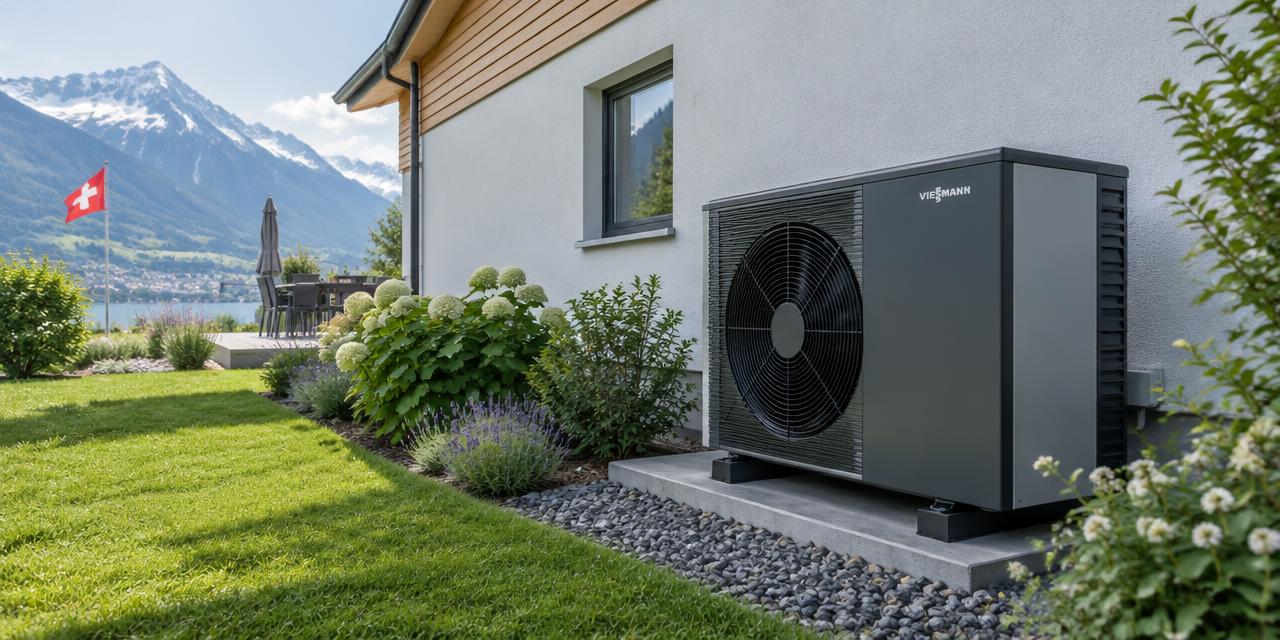
Heat pump installation in Schaffhausen: Complete Guide
You are planning to switch to a heat pump in Schaffhausen to heat your home more sustainably. This energy renovation project is a key step in reducing your carbon footprint and energy bills. To start off right, it is essential to understand the technical specifications and local requirements. At RenoIndex, we support you in this transition. Use our free online RenoIndex estimator to get an accurate price range and plan your budget with complete peace of mind today.
At a glance
Typical budget
CHF 42'400 – CHF 78'900
Midpoint
CHF 59'300
Grants found
0
Nearby companies
4
Worked examples in Schaffhausen
Small project
CHF 33'500 – CHF 61'400
Typical project
CHF 42'400 – CHF 78'900
Large project
CHF 55'600 – CHF 105'200
Project
Quantity
Low
High
Per unit
Small project
80 m²
CHF 33'500
CHF 61'400
CHF 600
Typical project
160 m²
CHF 42'400
CHF 78'900
CHF 400
Large project
280 m²
CHF 55'600
CHF 105'200
CHF 300
Computed with our estimator for Schaffhausen (regional factor included), standard finish. Only the project size changes.
Cost split (typical project)
Labour :CHF 23'700(40 %)
Materials :CHF 29'600(50 %)
Other costs :CHF 5'900(10 %)
What the price covers
Included
Supply and installation
VAT
Heat pump and standard connections; removal and equipment only according to answers
Not included
Permits and architect fees
Unexpected structural issues
Possible subsidies
Drilling beyond 150 m, buried or contaminated tank, asbestos, insulation and new finishes
With air-to-air: hot water and ducts only if selected; adaptations beyond the options excluded
Schaffhausen's housing stock in figures
In Schaffhausen, the federal building register lists 6'414 residential buildings and 20'175 dwellings. These municipal benchmarks help put your home in context, but do not replace an individual assessment.
73 %built before 1980
76 %heated by oil or gas
19.2 %electric hot water
4.2 %with declared solar thermal
Age of residential buildings
73 % built before 1980
Before 191921 %
1919–194523 %
1946–196014 %
1961–19708 %
1971–19807 %
1981–19908 %
1991–20006 %
2001–20107 %
Since 20117 %
Construction year does not reveal past renovations: check the current insulation condition.
Main heating energy
53 % · Gas
Gas53 %
Heating oil23 %
Heat pump15 %
Wood4 %
District heating3 %
Electricity2 %
This distribution describes recorded buildings, not your system's consumption or efficiency.
Heating and hot water: which energies?
Energy
Heating
Hot water
Gas
53 %
47.5 %
Heating oil
23 %
15.2 %
District heating
3 %
4.2 %
Heat pump
15 %
7.4 %
Electricity
2 %
19.2 %
Wood
4 %
1.8 %
Solar thermal
0 %
3.9 %
Each line gives the share of buildings using that energy, separately for heating and for hot water. The two columns do not always reach 100%: some buildings combine two systems, or reported none.
Type of heating system
Boiler (unspecified)75.4 %
Heat pump15.3 %
Heat exchanger (district)3.7 %
Condensing boiler1.9 %
Stove1.6 %
Central electric heating1.4 %
Direct electric heaters0.6 %
A standard non-condensing boiler is usually older and less efficient.
Renovations, heritage and volumes
For renovation planning in Schaffhausen, the current official building register data provides no specific figures regarding renovation years, heritage protection status, or building volumes. Because this coverage is effectively absent for these metrics, you cannot rely on register data to determine the scale of your insulation works or permit requirements. Consequently, we advise you to contact the municipality of Schaffhausen directly to confirm the regulatory status of your property. Engaging with local authorities early is essential to ensure your project aligns with all municipal requirements, as these specific building register parameters remain unavailable for analysis.
0
buildings flagged as protected
status known for 68 of 6'414 buildings; check with the municipality
Before starting the process of installing a heat pump, first check whether your area can connect to a priority district heating network. In some areas, authorities favour collective solutions to optimize overall energy efficiency.
Checking with the city services in advance will save you unnecessary investments. If district heating is not an option, the heat pump remains one of the most efficient alternatives.
RenoIndex helps you calculate installation costs to compare the different solutions available for your property.
Technical sizing and temperature
The capacity of your future heat pump should not be chosen at random. The local design outdoor temperature sets the heat pump's capacity needed to guarantee optimal comfort, even on the coldest winter days.
Correct sizing prevents premature compressor wear and ensures controlled electricity consumption. It is recommended to use a qualified installer who will take into account the specific heating needs of your building.
Do not forget to consult our RenoIndex estimator to get a cost estimate adapted to your situation.
Compliance with neighbour noise regulations
An experienced installer will be able to advise you on the quietest models and the ideal location on your plot to ensure perfect harmony with your neighbourhood while complying with current regulations.
Budgeting and financial planning
Replacing a heating system represents a significant investment for any homeowner. In addition to the equipment purchase, one must budget for labor costs for installation, any hydraulic circuit modifications, and electrical compliance work.
To better understand these costs, we recommend using the RenoIndex simulator. It will provide you with a realistic price range for your heat pump project, allowing you to compare the offers received from professionals.
Proper financial planning is the guarantee of a successful energy transition without any unpleasant budget surprises.
Your project in 5 steps
1. Estimate
Set a budget range with the estimator.
2. Grants
Apply before work starts.
3. Quotes
Compare at least 3 quotes.
4. Permit
Check with the municipality whether a permit is needed.
5. Works
Follow the site and do a written handover.
Grants and subsidies
No specific grant listed for this work. Maintenance tax deductions may still apply.
Companies in the area
F. Imeri Sàrl
2829 Vermes · about 98.1 km
The website presented under the name Imeri Chauffage et Sanitaire Sàrl offers plumbing, heating and solar thermal work, while F. Imeri Sàrl’s registered purpose refers to a scrap metal business.
Suggestions from the commercial register by distance and activity. Not an endorsement or partnership.
Frequently asked questions
How can I estimate the cost of my project?
Use the free RenoIndex simulator to get a reliable price range. This online service provides an overview of costs based on your home's configuration, helping you to better anticipate your expenses for installing a heat pump at your property.
Are noise limits strict?
Yes, heat pumps must comply with strict neighbour standards to limit noise pollution. It is crucial to install your outdoor unit while considering the distance to your neighbours and to use models certified for their low noise level to be in full compliance.
What are the benefits of precise sizing?
Precise sizing based on the local outdoor temperature ensures your heat pump operates at peak efficiency. This extends the system's lifespan, avoids unnecessary electricity consumption, and guarantees constant heating throughout the winter despite low temperatures.
Should I check district heating first?
Absolutely. Checking if your area can connect to a priority district heating network is an essential first step. This allows you to choose the most suitable heating solution according to local energy policies and avoid investing unnecessarily in an individual installation that is not recommended.