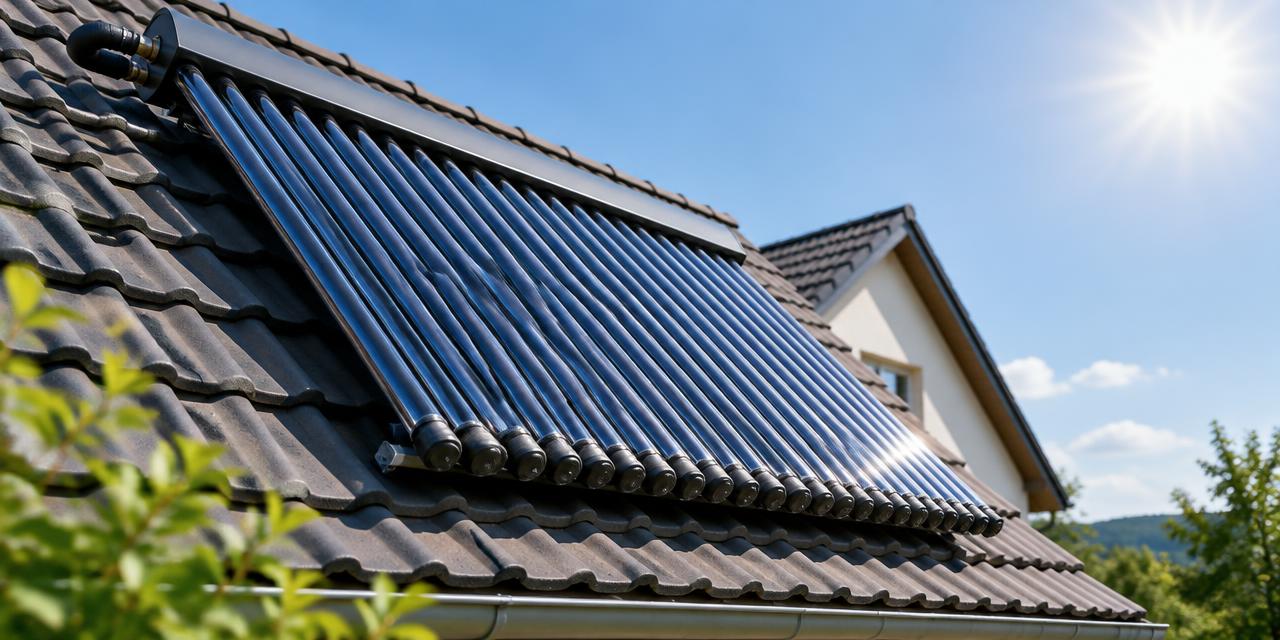
Are you planning to install solar thermal collectors in Sarnen for your domestic hot water? This ecological project is a sustainable solution to increase your property value while reducing energy bills. As every house is unique, integrating solar technologies requires careful planning to ensure long-term efficiency. In this guide, we cover the key points to consider for a successful project. Use the free RenoIndex estimator to get a precise price range for your specific renovation needs in the region today.
At a glance
Typical budget
CHF 11'500 – CHF 26'600
Midpoint
CHF 18'400
Grants found
0
Nearby companies
4
Worked examples in Sarnen
Small project
CHF 8'900 – CHF 20'800
Typical project
CHF 11'500 – CHF 26'600
Large project
CHF 15'700 – CHF 36'200
Project
Quantity
Low
High
Per unit
Small project
3 m²
CHF 8'900
CHF 20'800
CHF 4'800
Typical project
6 m²
CHF 11'500
CHF 26'600
CHF 3'100
Large project
11 m²
CHF 15'700
CHF 36'200
CHF 2'300
Computed with our estimator for Sarnen (regional factor included), standard finish. Only the project size changes.
Cost split (typical project)
Labour :CHF 7'400(40 %)
Materials :CHF 9'200(50 %)
Other costs :CHF 1'800(10 %)
What the price covers
Included
Supply and installation
VAT
Collectors, controls, standard connection and tank according to answers
Not included
Permits and architect fees
Unexpected structural issues
Possible subsidies
Roof refurbishment and replacement of main heating
Sarnen's housing stock in figures
In Sarnen, the federal building register lists 2'134 residential buildings and 5'278 dwellings. These municipal benchmarks help put your home in context, but do not replace an individual assessment.
52 %built before 1980
23 %heated by oil or gas
36 %electric hot water
3.9 %with declared solar thermal
Age of residential buildings
52 % built before 1980
Before 191919 %
1919–19456 %
1946–19607 %
1961–19709 %
1971–198011 %
1981–199013 %
1991–200012 %
2001–201010 %
Since 201113 %
Construction year does not reveal past renovations: check the current insulation condition.
Main heating energy
39 % · Heat pump
Heat pump39 %
Heating oil23 %
Wood20 %
District heating10 %
Electricity7 %
This distribution describes recorded buildings, not your system's consumption or efficiency.
Heating and hot water: which energies?
Energy
Heating
Hot water
Heating oil
23 %
17 %
District heating
10 %
11.6 %
Heat pump
39 %
17.7 %
Electricity
7 %
36 %
Wood
20 %
12.2 %
Solar thermal
0 %
4.5 %
Each line gives the share of buildings using that energy, separately for heating and for hot water. The two columns do not always reach 100%: some buildings combine two systems, or reported none.
Type of heating system
Heat pump39.1 %
Boiler (unspecified)36.9 %
Heat exchanger (district)9.6 %
Stove6.7 %
Central electric heating6.4 %
Direct electric heaters1 %
A standard non-condensing boiler is usually older and less efficient.
Houses or apartment buildings?
Single-family houses50.5 %
Two-dwelling houses24.1 %
Apartment buildings (3+)25.4 %
13 % of buildings mix housing with shops or offices.
The typical building
storeys (median)
3
median footprint
125 m²
median dwelling area
100 m²
Renovations, heritage and volumes
For homeowners in Sarnen, RegBL data provides vital context for renovation planning. With 436 out of 1124 known buildings designated under heritage protection, contacting municipal authorities early is essential for permit compliance. The median house volume of 894 m3 helps determine the scale required for insulation or heating system upgrades. Please be aware that data coverage is partial; only 15 buildings are officially measured according to the SIA 416 standard, and no specific renovation years are recorded for these properties. Always consult local municipal services early in your project to ensure all legal requirements are addressed.
436
buildings flagged as protected
status known for 1'124 of 2'134 buildings; check with the municipality
Solar thermal collectors usually cover a large part of your hot water needs during the summer period, thereby reducing dependence on fossil fuels.
To maximize this performance, south-facing roof orientation is ideal, although east or west orientations are technically feasible with adapted sizing. It is crucial to assess your household's actual consumption to choose the necessary collector area.
A well-configured system allows for significant savings on your annual energy consumption as soon as the installation is commissioned.
Coupling energy technologies
Combining solar collectors with other systems such as a heat pump requires a careful sizing study. This synergy allows you to use the best energy sources according to the season, ensuring constant availability of hot water and heating.
A well-thought-out hybrid installation optimizes not only profitability but also extends the life of your equipment by avoiding unnecessary strain.
Consult a professional to harmonize the various components and ensure intelligent management of your domestic energy flow in Sarnen.
Financial support and grants
These subsidies aim to encourage the energy transition and make solar investments more affordable for homeowners. Keep in mind that applications must generally be submitted before work begins to be eligible for the various cantonal grants available locally.
Planning and implementation
A successful solar installation starts with a technical analysis of your roof and current energy needs. Use local experts to ensure implementation complies with technical standards.
Regular maintenance of the solar circuits is also essential to ensure long-term efficiency. To get a cost estimate for your project and compare potential expenses, do not hesitate to use the RenoIndex tool.
Thorough planning is the key to a sustainable and profitable energy renovation project for your home.
Your project in 5 steps
1. Estimate
Set a budget range with the estimator.
2. Grants
Apply before work starts.
3. Quotes
Compare at least 3 quotes.
4. Permit
Check with the municipality whether a permit is needed.
5. Works
Follow the site and do a written handover.
Grants and subsidies
No specific grant listed for this work. Maintenance tax deductions may still apply.
Companies in the area
F. Imeri Sàrl
2829 Vermes · about 71.9 km
The website presented under the name Imeri Chauffage et Sanitaire Sàrl offers plumbing, heating and solar thermal work, while F. Imeri Sàrl’s registered purpose refers to a scrap metal business.
Operating in Biel/Bienne since 1948, E. Vauclair SA provides plumbing, heating and solar installations, architectural sheet metalwork, roofing and flat roof renovation.
Suggestions from the commercial register by distance and activity. Not an endorsement or partnership.
Frequently asked questions
Can solar thermal replace my boiler?
No, it mainly serves to heat domestic hot water. It acts as a supplement to your existing heating system to reduce your overall consumption during sunny months.
How much roof area is needed?
The area depends on the number of occupants and your consumption. Generally, a few square meters are enough to cover the hot water needs of a standard family.
Are grants cumulative?
This depends on the canton. It is advisable to check the specific guidelines of the Canton of Obwalden to see if you can combine multiple grant sources.
What is the lifespan of collectors?
Solar thermal collectors are designed to last between 20 and 25 years, provided they receive regular maintenance and are installed according to best practices.