
Gyger Haustechnik
2824 Vicques · about 30.4 km
Gyger Haustechnik specializes in sanitary installations, heating systems, bathroom renovations, and tiling work.
gyger-co.chSolar water heating · Riehen
At a glance
Small project
CHF 9'600 – CHF 22'600
Typical project
CHF 12'400 – CHF 28'800
Large project
CHF 17'000 – CHF 39'100
| Project | Quantity | Low | High | Per unit |
|---|---|---|---|---|
| Small project | 3 m² | CHF 9'600 | CHF 22'600 | CHF 5'200 |
| Typical project | 6 m² | CHF 12'400 | CHF 28'800 | CHF 3'300 |
| Large project | 11 m² | CHF 17'000 | CHF 39'100 | CHF 2'500 |
Computed with our estimator for Riehen (regional factor included), standard finish. Only the project size changes.
Included
Not included
In Riehen, the federal building register lists 4'255 residential buildings and 10'905 dwellings. These municipal benchmarks help put your home in context, but do not replace an individual assessment.
73 % built before 1980
Construction year does not reveal past renovations: check the current insulation condition.
38 % · District heating
This distribution describes recorded buildings, not your system's consumption or efficiency.
| Energy | Heating | Hot water |
|---|---|---|
| Gas | 36 % | 20.7 % |
| Heating oil | 9 % | 5.4 % |
| District heating | 38 % | 37.7 % |
| Heat pump | 15 % | 15.4 % |
| Electricity | 1 % | 14.5 % |
| Wood | 1 % | 0.5 % |
| Solar thermal | 0 % | 5.8 % |
Each line gives the share of buildings using that energy, separately for heating and for hot water. The two columns do not always reach 100%: some buildings combine two systems, or reported none.
A standard non-condensing boiler is usually older and less efficient.
7.5 % of buildings mix housing with shops or offices.
For renovation planning in Riehen, RegBL figures reveal that 1031 out of 4255 buildings are under heritage protection. If your property is classified, you must contact the municipality early to navigate permit requirements. Regarding house volume, data coverage is partial; the standard SIA 416 volume measurement is not recorded for the 2885 houses listed, complicating the assessment of scale for insulation or heating projects. Additionally, the year of last renovation is not available in the registry. Homeowners should account for these missing metrics when estimating project costs and technical specifications for their specific building.
Source : OFS — RegBL (export communal complet). Existing residential buildings; percentages of recorded values.
Solar thermal collectors usually cover much of summer hot water, significantly reducing your dependence on fossil fuels or electricity. By utilizing direct radiation, these systems allow for efficient thermal production.
To maximize the lifespan of your system, it is recommended to engage qualified professionals for the sizing and installation of components.
Regular maintenance ensures that the heat transfer fluid circulates without loss of efficiency, guaranteeing consistent performance throughout the year.
Integrating a solar thermal system into an existing home requires rigorous analysis. Combining collectors with a heat pump needs a sizing study to avoid conflicts in thermal regulation.
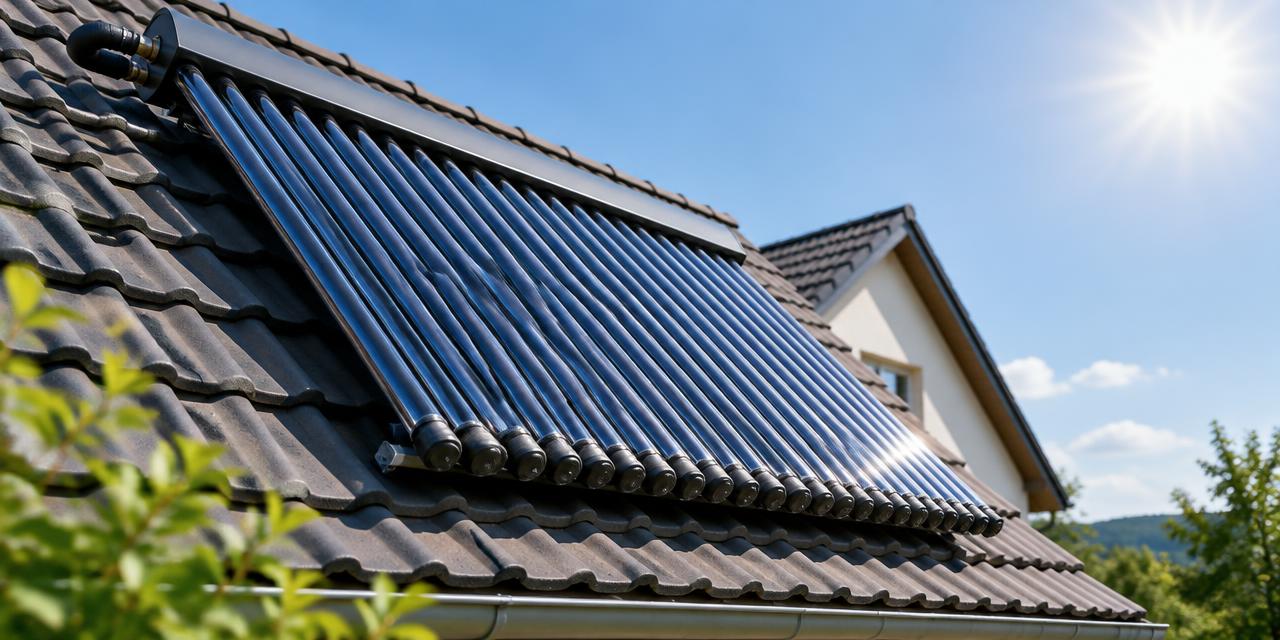
The choice between flat plate or vacuum tube collectors will depend on your roof surface and actual hot water needs. A preliminary simulation helps validate the most cost-effective scenario.
RenoIndex assists you in this step by providing a clear estimate to budget your renovation work effectively.
It is recommended to regularly check the assistance available at the cantonal level before validating your quote. These financial supports can reduce the initial cost of your energy renovation project.
Keep in mind that any application must be submitted before the start of work to be eligible for potential cantonal funding.
The success of your project relies on structured planning. Start with a technical feasibility study of your roof: orientation, slope, and lack of shading are crucial. Once the system is sized by an expert, installation work is usually quick.
Ensure you obtain all necessary permits before the work begins.
For effective budget management, use the RenoIndex online estimator, which provides an indicative price range for your solar thermal installation, allowing you to move forward confidently with your renovation project.
1. Estimate
Set a budget range with the estimator.
2. Grants
Apply before work starts.
3. Quotes
Compare at least 3 quotes.
4. Permit
Check with the municipality whether a permit is needed.
5. Works
Follow the site and do a written handover.
No specific grant listed for this work. Maintenance tax deductions may still apply.
2824 Vicques · about 30.4 km
Gyger Haustechnik specializes in sanitary installations, heating systems, bathroom renovations, and tiling work.
gyger-co.ch2824 Vicques · about 30.4 km
Buchwalder Sàrl in Vicques has specialized in the installation, repair, and renovation of heating and sanitary systems since 1966.
buchwalder-sarl.ch2824 Vicques · about 30.4 km
Specialist since 1968 in sanitary installations, heating (gas, oil, wood, renewable energy), and tinsmithing with 24/7 emergency repair service.
sanit.ch2822 Courroux · about 31.2 km
Sanit & Bilat Fils S.A. is a company specializing in sanitary installations, heating systems, and renewable energy solutions.
sanit.chSuggestions from the commercial register by distance and activity. Not an endorsement or partnership.
A well-maintained solar thermal system can operate efficiently for 20 to 25 years. Regular maintenance, including checking the heat transfer fluid and the control system, is essential to maximize this longevity and ensure optimal hot water production over the long term.
Yes, solar thermal collectors work in winter, even in cold weather, as they capture solar radiation. However, efficiency is lower due to shorter daylight hours. The system is therefore generally coupled with a backup source such as a boiler or a heat pump.
It is imperative to check with the municipal administration of Riehen regarding local zoning regulations. Although most solar installations are encouraged, certain protected areas or listed buildings may require special authorization to preserve the architectural landscape.
To get a realistic estimate adapted to your home, you can use the free RenoIndex estimator. It considers several factors to provide you with a price range, helping you plan your budget before requesting detailed quotes from companies.