
Eco6therm Sàrl
2832 Rebeuvelier · about 121.3 km
Eco6therm specializes in the installation of heating systems, particularly heat pumps, and solar photovoltaic energy solutions.
eco6therm.chSolar panels · Kirchberg (SG)
At a glance
Small project
CHF 8'800 – CHF 16'500
Typical project
CHF 16'200 – CHF 29'300
Large project
CHF 28'000 – CHF 49'700
| Project | Quantity | Low | High | Per unit |
|---|---|---|---|---|
| Small project | 5 kWc | CHF 8'800 | CHF 16'500 | CHF 2'500 |
| Typical project | 10 kWc | CHF 16'200 | CHF 29'300 | CHF 2'200 |
| Large project | 18 kWc | CHF 28'000 | CHF 49'700 | CHF 2'100 |
Computed with our estimator for Kirchberg (SG) (regional factor included), standard finish. Only the project size changes.
Included
Not included
In Kirchberg (SG), the federal building register lists 2'020 residential buildings and 4'229 dwellings. These municipal benchmarks help put your home in context, but do not replace an individual assessment.
55 % built before 1980
Construction year does not reveal past renovations: check the current insulation condition.
29 % · Heat pump
This distribution describes recorded buildings, not your system's consumption or efficiency.
| Energy | Heating | Hot water |
|---|---|---|
| Gas | 23 % | 18.6 % |
| Heating oil | 15 % | 10.5 % |
| District heating | 13 % | 12.8 % |
| Heat pump | 29 % | 27.2 % |
| Electricity | 3 % | 18 % |
| Wood | 16 % | 8 % |
| Solar thermal | 0 % | 4.9 % |
Each line gives the share of buildings using that energy, separately for heating and for hot water. The two columns do not always reach 100%: some buildings combine two systems, or reported none.
A standard non-condensing boiler is usually older and less efficient.
15.7 % of buildings mix housing with shops or offices.
For renovation projects in Kirchberg (SG), federal building register figures provide vital context. With 8 buildings classified as heritage sites out of 135 known instances, owners must contact the municipality early regarding specific permit requirements. The median building volume is 948.5 m3, which is essential for determining the scale of insulation or heating system upgrades. Please note that data coverage is partial, as the volume was measured according to the SIA 416 standard for only 6 buildings. These figures serve as a foundational reference to help homeowners realistically estimate the scope and costs of upcoming property renovations.
Source : OFS — RegBL (export communal complet). Existing residential buildings; percentages of recorded values.
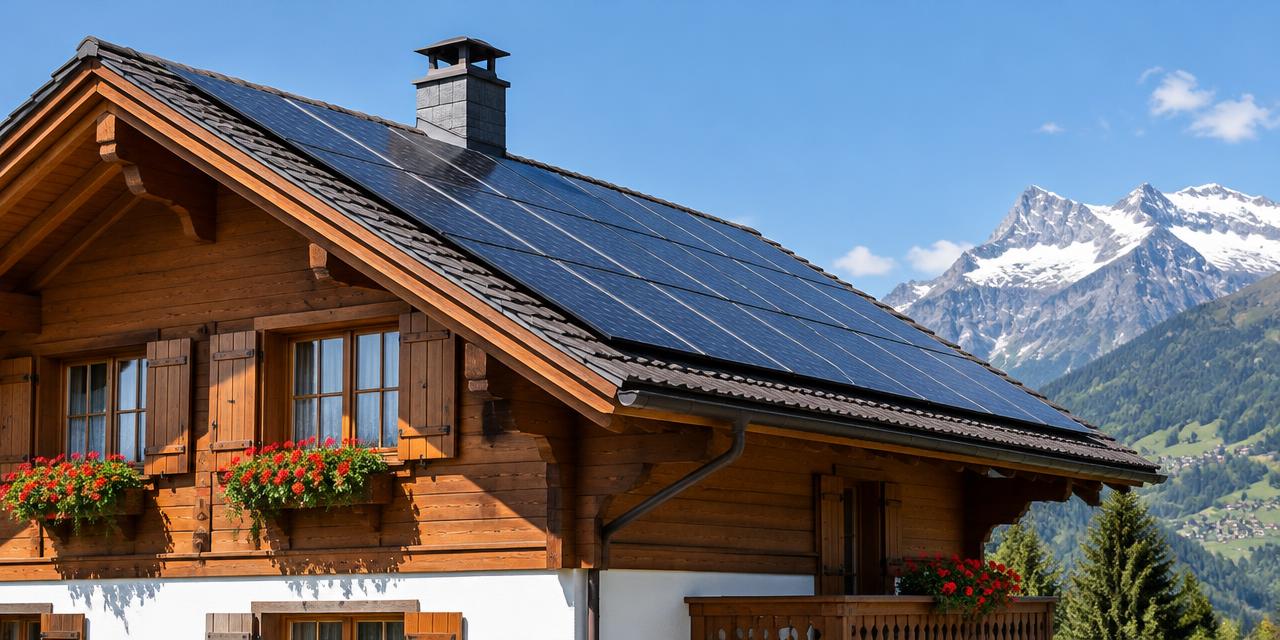
Investing in photovoltaics turns your roof into a sustainable source of energy. Beyond the positive environmental impact, this installation increases the energy autonomy of your household.
Profitability depends mainly on how much power you use on site: the more you use your own production to run your appliances or charge your electric vehicle, the more you save on your annual bill.
It is advisable to analyze your consumption habits to optimize the sizing of the system and maximize your long-term savings.
This administrative simplification accelerates the implementation of your project. However, it is always recommended to verify local specificities related to heritage protection or protected areas.
Thorough preparation will help you avoid unnecessary delays in starting your solar installation in Kirchberg.
This financial support helps cover a portion of the installation costs, thereby improving your project's return on investment. As funds are allocated based on specific criteria, it is advisable to submit your application before starting work.
Check RenoIndex to estimate your net cost and understand how these federal grants apply to your specific situation in Kirchberg.
Before installing panels, it is crucial to assess the general condition of your roof. If your roof needs renovation in the coming years, it is better to perform this work beforehand to avoid having to dismantle the panels later.
The structural integrity must be checked by a professional to ensure it can support the extra load.
Additionally, good ventilation under the modules is essential for maintaining high efficiency, as excessive heat can reduce the performance of photovoltaic cells. A certified installer will advise you on the best technical configuration for your home.
1. Estimate
Set a budget range with the estimator.
2. Grants
Apply before work starts.
3. Quotes
Compare at least 3 quotes.
4. Permit
Check with the municipality whether a permit is needed.
5. Works
Follow the site and do a written handover.
No specific grant listed for this work. Maintenance tax deductions may still apply.
2832 Rebeuvelier · about 121.3 km
Eco6therm specializes in the installation of heating systems, particularly heat pumps, and solar photovoltaic energy solutions.
eco6therm.ch2740 Moutier · about 126.3 km
Moutier-based company specializing in tinsmithing, roofing, ventilated facades, and solar panel installation.
zbinden-joye.ch2740 Moutier · about 126.3 km
Company in Moutier specializing in plumbing, heating (oil, wood, heat pumps), and solar thermal and photovoltaic solutions.
bmonnerat.ch2800 Delémont · about 127.3 km
Construction and renovation company in Delémont, specializing in masonry, sanitary facilities, heating, and turnkey projects in the Jura region.
adsconstruction.chSuggestions from the commercial register by distance and activity. Not an endorsement or partnership.
Modern solar panels are designed to be durable and high-performing in the long term. On average, a photovoltaic system has a technical lifespan of 25 to 30 years, while maintaining good energy production capacity throughout this period.
In Switzerland, roof-mounted solar installations are generally subject to a simple notification procedure. If your project meets integration standards, you will not need a full building permit. It is however advisable to check with the competent municipal services to confirm your situation.
Savings depend on the self-consumption rate. By producing your own electricity, you avoid purchase costs and grid fees for every kilowatt-hour used. Use RenoIndex to estimate costs and calculate your potential profitability based on your actual energy needs.
The one-off remuneration is managed by Pronovo at the federal level. You must submit your application online once the installation is finished and in service. Make sure that all technical documents are in order to facilitate the processing of your application.