
Steinlin und Partner AG
3930 Visp · about 133.3 km
Steinlin und Partner AG is a Swiss company specializing in electrical installations, energy solutions such as photovoltaics, and IT services.
steinlin.chHome solar battery · Domat/Ems
At a glance
Small project
CHF 4'100 – CHF 9'400
Typical project
CHF 7'400 – CHF 15'800
Large project
CHF 12'800 – CHF 26'200
| Project | Quantity | Low | High | Per unit |
|---|---|---|---|---|
| Small project | 5 kWh | CHF 4'100 | CHF 9'400 | CHF 1'200 |
| Typical project | 10 kWh | CHF 7'400 | CHF 15'800 | CHF 1'100 |
| Large project | 18 kWh | CHF 12'800 | CHF 26'200 | CHF 1'000 |
Computed with our estimator for Domat/Ems (regional factor included), standard finish. Only the project size changes.
Included
Not included
In Domat/Ems, the federal building register lists 1'656 residential buildings and 3'924 dwellings. These municipal benchmarks help put your home in context, but do not replace an individual assessment.
51 % built before 1980
Construction year does not reveal past renovations: check the current insulation condition.
50 % · Heating oil
This distribution describes recorded buildings, not your system's consumption or efficiency.
| Energy | Heating | Hot water |
|---|---|---|
| Gas | 4 % | 6.1 % |
| Heating oil | 50 % | 53.1 % |
| District heating | 2 % | 2.3 % |
| Heat pump | 39 % | 10 % |
| Electricity | 1 % | 22.6 % |
| Wood | 3 % | 1.2 % |
| Solar thermal | 0 % | 4.7 % |
Each line gives the share of buildings using that energy, separately for heating and for hot water. The two columns do not always reach 100%: some buildings combine two systems, or reported none.
A standard non-condensing boiler is usually older and less efficient.
5.8 % of buildings mix housing with shops or offices.
For renovation planning in Domat/Ems, federal building register figures provide essential insights. With partial data coverage, the median volume for the 14 buildings measured under SIA 416 is 926 m3, helping you gauge the scale for heating or insulation upgrades. Additionally, out of 1656 total buildings, 2 are currently listed under heritage protection. If your property is impacted by these heritage status requirements, you must contact municipal authorities early in your project timeline. Engaging with the municipality promptly is vital for navigating permit processes and ensuring all renovation plans strictly adhere to local regulatory standards.
Source : OFS — RegBL (export communal complet). Existing residential buildings; percentages of recorded values.
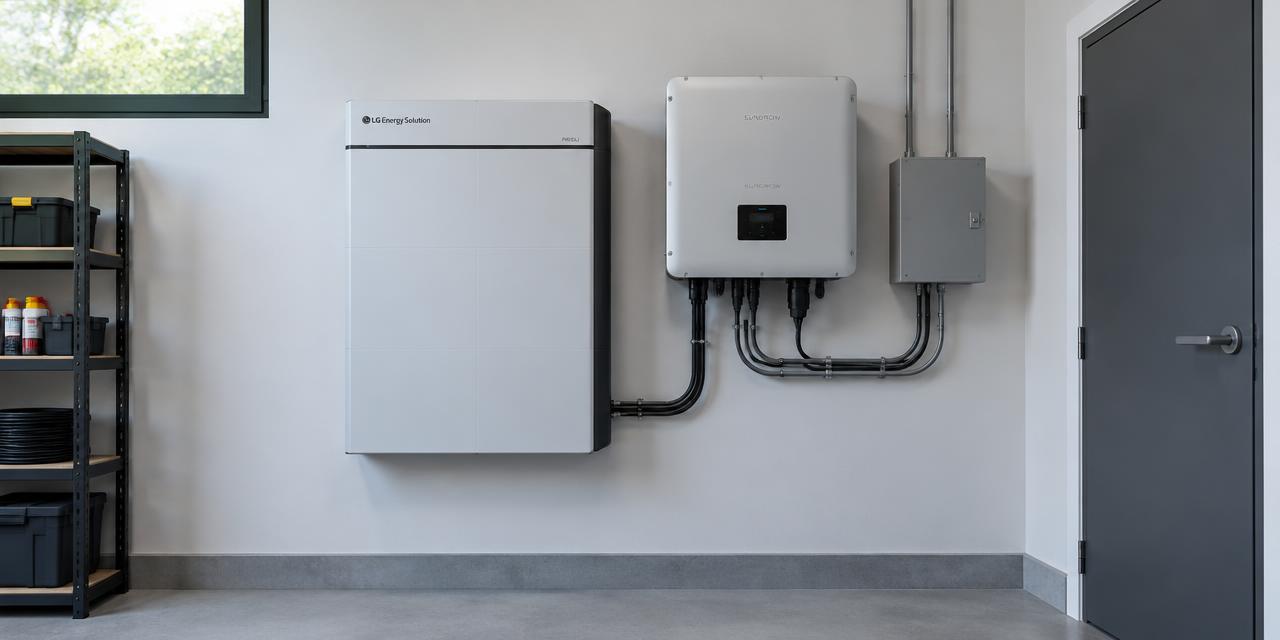
A battery is particularly worthwhile when solar output clearly exceeds your daytime use. Without storage, excess energy is usually fed back into the grid. By storing this surplus, you maximize your self-consumption and lower your electricity bills over time.
It is a strategic investment for homeowners in Domat/Ems looking to enhance their energy profile. Before you begin, ensure you evaluate your actual needs to avoid unnecessary oversizing, which increases initial costs without providing proportional returns.
Proper dimensioning is the key to ensuring your solar installation remains a profitable long-term asset.
The golden rule is to size capacity by evening consumption, not panel power. A common mistake is attempting to store all summer production, whereas the primary goal is covering nighttime needs when there is no generation.
Analyze your historical consumption data to define the storage volume required.
Use the RenoIndex simulator to obtain a cost range consistent with your chosen capacity, allowing you to optimize your renovation budget effectively and choose the right equipment size for your specific household energy profile.
Before buying, always check compatibility with your existing inverter. If your current system is not designed for storage expansion, you might require a hybrid inverter or an AC-coupling system.
This technical verification is crucial to ensure the efficiency and safety of your installation in Domat/Ems. Hire certified professionals for the connection to ensure compliance with current safety standards.
A well-planned installation ensures a longer lifespan for your equipment and optimal performance throughout the year, preventing technical issues and costly future repairs.
Planning is the most important step. Beyond technical aspects, consider the location of the battery: it requires a dry, temperate, and ventilated space to maintain performance.
While this guide does not list specific grants, we recommend regularly checking for current cantonal subsidies in the canton of Grisons. Use RenoIndex to get a reliable cost estimate for labor and materials.
Rigorous preparation will allow you to complete your project in Domat/Ems with peace of mind and confidence.
1. Estimate
Set a budget range with the estimator.
2. Grants
Apply before work starts.
3. Quotes
Compare at least 3 quotes.
4. Permit
Check with the municipality whether a permit is needed.
5. Works
Follow the site and do a written handover.
No specific grant listed for this work. Maintenance tax deductions may still apply.
3930 Visp · about 133.3 km
Steinlin und Partner AG is a Swiss company specializing in electrical installations, energy solutions such as photovoltaics, and IT services.
steinlin.ch3930 Visp · about 133.3 km
TZ Stromag offers comprehensive electrical engineering services for residential buildings, including installations, telematics services, and security.
stromag.ch3942 Raron · about 136.9 km
TZ Stromag is a full-service provider of electrical engineering for buildings, covering installations, automation, security, and in-house switchgear construction.
stromag.ch3929 Täsch · about 152 km
Specialist for electrical installations, photovoltaics, and household appliances with branches in Täsch and Visp.
imboden-elektro.chSuggestions from the commercial register by distance and activity. Not an endorsement or partnership.
Lifespan depends on the technology, but most current lithium-ion batteries last between 10 and 15 years. Their performance gradually decreases after several thousand charge and discharge cycles.
Generally, an indoor home battery does not require a building permit, but it is advisable to check local rules or consult your electrician to ensure compliance with electrical standards.
Yes, this is possible via AC-coupling, but it often requires adding a specific inverter or modifying your current installation by a qualified professional.
Use the free RenoIndex simulator to get a personalized estimate based on regional pricing and your desired storage capacity.