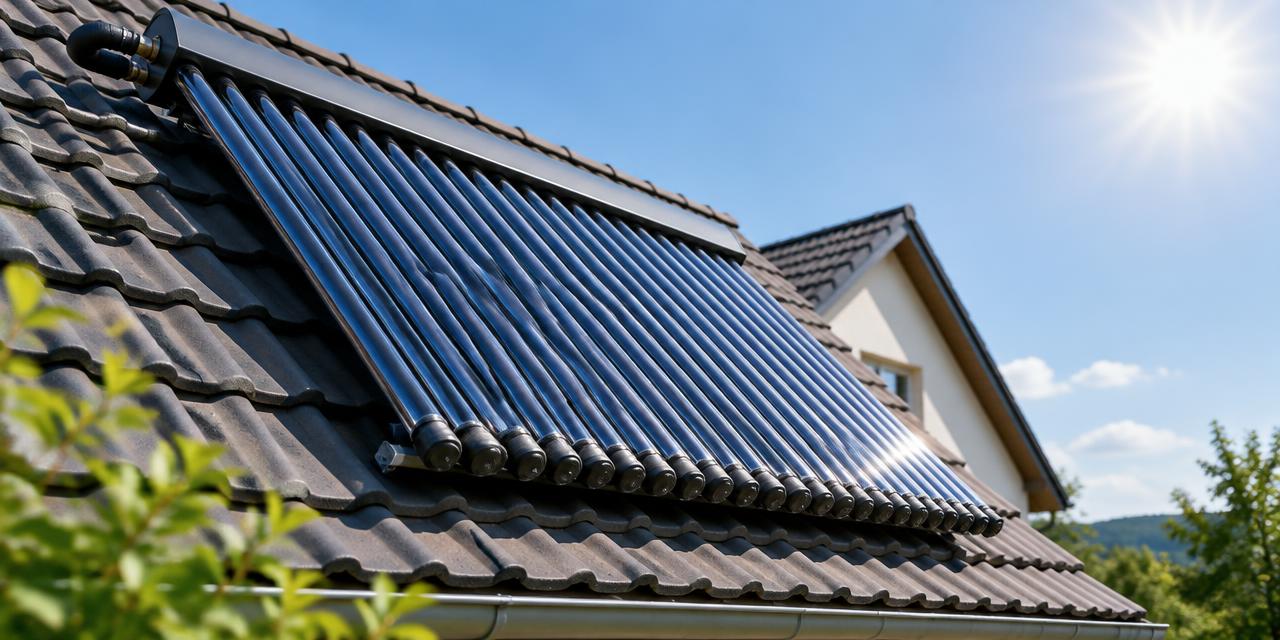
Are you planning to install solar thermal collectors in Chur to optimize your hot water production? This sustainable project increases your property value while reducing energy bills. Whether you own a single-family home or an apartment building, careful planning is essential for success. In this guide, we cover the technical basics and important considerations for your renovation project. To get a precise cost estimate for your situation, use the free RenoIndex tool and receive a clear price range for your solar installation.
At a glance
Typical budget
CHF 12'200 – CHF 28'200
Midpoint
CHF 19'600
Grants found
0
Nearby companies
4
Worked examples in Chur
Small project
CHF 9'500 – CHF 22'100
Typical project
CHF 12'200 – CHF 28'200
Large project
CHF 16'700 – CHF 38'400
Project
Quantity
Low
High
Per unit
Small project
3 m²
CHF 9'500
CHF 22'100
CHF 5'100
Typical project
6 m²
CHF 12'200
CHF 28'200
CHF 3'300
Large project
11 m²
CHF 16'700
CHF 38'400
CHF 2'400
Computed with our estimator for Chur (regional factor included), standard finish. Only the project size changes.
Cost split (typical project)
Labour :CHF 7'800(40 %)
Materials :CHF 9'800(50 %)
Other costs :CHF 2'000(10 %)
What the price covers
Included
Supply and installation
VAT
Collectors, controls, standard connection and tank according to answers
Not included
Permits and architect fees
Unexpected structural issues
Possible subsidies
Roof refurbishment and replacement of main heating
Chur's housing stock in figures
In Chur, the federal building register lists 4'785 residential buildings and 21'817 dwellings. These municipal benchmarks help put your home in context, but do not replace an individual assessment.
64 %built before 1980
65 %heated by oil or gas
15.3 %electric hot water
2.7 %with declared solar thermal
Age of residential buildings
64 % built before 1980
Before 191919 %
1919–194512 %
1946–196013 %
1961–197010 %
1971–198010 %
1981–19909 %
1991–20008 %
2001–201010 %
Since 20119 %
Construction year does not reveal past renovations: check the current insulation condition.
Main heating energy
43 % · Gas
Gas43 %
Heating oil22 %
Heat pump18 %
Wood9 %
District heating6 %
Electricity2 %
This distribution describes recorded buildings, not your system's consumption or efficiency.
Heating and hot water: which energies?
Energy
Heating
Hot water
Gas
43 %
38.9 %
Heating oil
22 %
22.5 %
District heating
6 %
5.3 %
Heat pump
18 %
12.6 %
Electricity
2 %
15.3 %
Wood
9 %
2.3 %
Solar thermal
0 %
2.6 %
Each line gives the share of buildings using that energy, separately for heating and for hot water. The two columns do not always reach 100%: some buildings combine two systems, or reported none.
Type of heating system
Boiler (unspecified)62.4 %
Heat pump18.5 %
Stove7.7 %
Heat exchanger (district)6 %
Condensing boiler3.2 %
Central electric heating1.6 %
Direct electric heaters0.5 %
A standard non-condensing boiler is usually older and less efficient.
Houses or apartment buildings?
Single-family houses50 %
Two-dwelling houses12.6 %
Apartment buildings (3+)37.4 %
Other0 %
7.6 % of buildings mix housing with shops or offices.
The typical building
storeys (median)
3
median footprint
126 m²
median dwelling area
85 m²
Renovations, heritage and volumes
For homeowners planning renovations in Chur, the federal building register indicates a median house volume of 1062.5 m3, which serves as a baseline for assessing the scale of insulation or heating system upgrades. It is important to note that this figure is based on only 8 out of 2392 recorded houses, representing a very partial data coverage. Furthermore, information regarding heritage protection is largely unavailable for the 4785 listed buildings. Given these gaps in documentation, we strongly advise contacting the municipality directly to verify local permit requirements and any potential conservation restrictions before proceeding with your renovation plans.
0
buildings flagged as protected
status known for 822 of 4'785 buildings; check with the municipality
Solar thermal collectors are an efficient solution for converting free solar energy into domestic heat. Generally, solar thermal collectors cover a large portion of your hot water needs during the summer, reducing the strain on your primary heating system.
This technology enables increased energy independence during sunny months. A well-sized installation ensures consistent production and a long service life, minimizing your carbon footprint while maintaining optimal comfort for all building occupants.
It represents a smart, forward-thinking investment for your property that pays off throughout the warmer seasons.
Planning and sizing
A successful installation relies on rigorous planning. It is crucial to evaluate your roof orientation and pitch to maximize sunlight exposure.
Furthermore, if you plan to combine your collectors with a heat pump, a sizing study is essential to ensure maximum efficiency and synergy between both systems. This technical analysis helps avoid oversized or inefficient equipment.
Do not forget to use the RenoIndex tool to get a realistic cost estimate based on your project's specific configuration before requesting quotes from local professionals to ensure you stay within your budget.
Grants and financial support
These grants help accelerate the return on investment for your renovation project. It is highly recommended to check the current conditions for grants at the cantonal level before starting work.
By anticipating these steps, you can significantly reduce your out-of-pocket expenses. RenoIndex helps you by providing the information needed to estimate your total budget, including potential savings from grants, ensuring a transparent financial overview.
Maintenance and durability
Once installed, solar thermal systems require regular maintenance to maintain performance over the long term. Annual checks of the heat transfer fluid and the circulation pump are often recommended to avoid efficiency losses.
Investing in quality equipment and hiring certified installers ensures greater reliability. By following these recommendations, you ensure the longevity of your equipment and maximize energy savings over several decades.
To plan the renewal or installation of your system, consult our RenoIndex estimator to quickly obtain a price range tailored to your specific project needs.
Your project in 5 steps
1. Estimate
Set a budget range with the estimator.
2. Grants
Apply before work starts.
3. Quotes
Compare at least 3 quotes.
4. Permit
Check with the municipality whether a permit is needed.
5. Works
Follow the site and do a written handover.
Grants and subsidies
No specific grant listed for this work. Maintenance tax deductions may still apply.
Companies in the area
Clavien Fabrice Sanitaires Sàrl
3972 Miège · about 161.7 km
Clavien Fabrice Sanitaires Sàrl in Miège provides plumbing and heating installations, including heat pumps, as well as roofing work and the installation of solar thermal and photovoltaic panels.
The website presented under the name Imeri Chauffage et Sanitaire Sàrl offers plumbing, heating and solar thermal work, while F. Imeri Sàrl’s registered purpose refers to a scrap metal business.
Suggestions from the commercial register by distance and activity. Not an endorsement or partnership.
Frequently asked questions
How long does it take to install the collectors?
Generally, the physical installation of collectors on the roof and connection to the water tank takes between two and five days, depending on the complexity of the roof and existing plumbing. Preliminary planning with a professional is essential.
Is it profitable without cantonal grants?
Yes, solar thermal remains profitable in the long run thanks to energy bill savings. Although grants accelerate the payback, fuel savings over twenty years largely offset the initial investment.
Do I need a building permit?
Rules vary depending on protected zones and building type. It is recommended to contact the local building authority in Chur to confirm if a simple notification is sufficient or if a permit is required.
Does solar thermal work in winter?
Collectors work even in winter during clear weather, but output is lower than in summer. They mainly serve as a backup to your primary heating system during the coldest months of the year.